
On this page
COUPLE PHOTOGRAPHY · A PRACTICAL POSING GUIDE
Couple Photoshoot Poses: How to Look Natural Together
Six easy starting points. Clear direction for your hands, feet, where to look, and how to move.
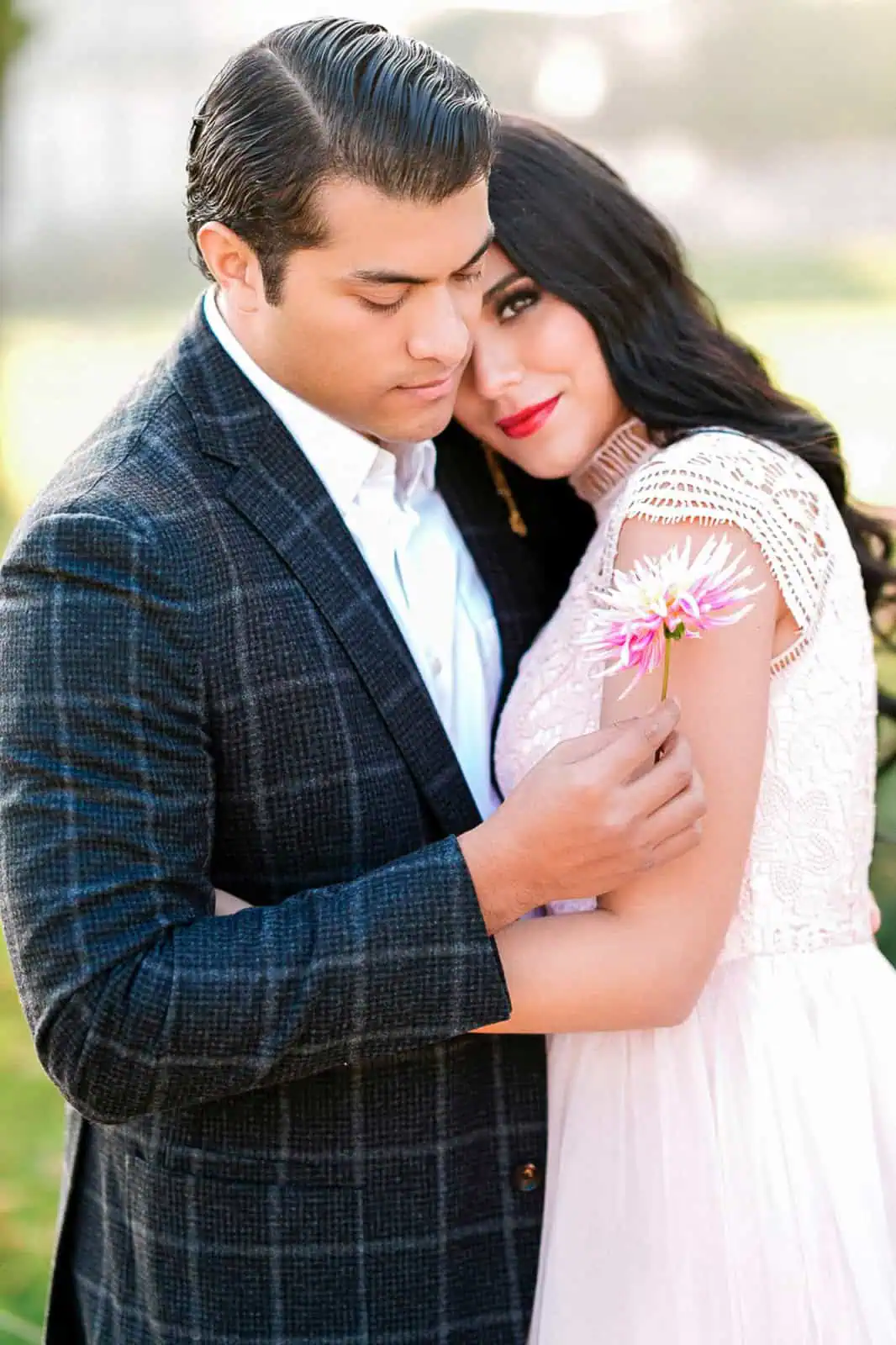
Start with the two of you
The best couple photos look like the two of you: the way you laugh, hold each other, or share a quiet look. You don’t need to know how to pose to get there. These couple photoshoot poses give you simple starting points, with clear illustrations and real photographs showing how each idea comes together.
Start with a walk, a close embrace, or a portrait looking straight at the camera. A small change in your hands, how close you stand, or where you look can give the same position a different feel. Choose the examples you like, whether your style is playful, romantic, or quietly elegant. Dips, lifts, and kisses are there if they suit you.
In Paris, our fun, English-speaking photographers guide both of you throughout the session. We watch the details: where your hands rest, how your feet turn, the angle you prefer, when to breathe out, and how to let an engagement ring show. We’ll explain what to do and adjust as we go, so you can enjoy each other and feel fabulous in front of the lens. Bring a few ideas; we’ll help make them yours.
Six Easy Couple Photoshoot Poses to Start With
Start comfortably, give both hands somewhere to rest, choose where to look, and keep breathing. Your photographer can then refine the spacing, angle, and expression. A small action can help; a still portrait deserves just as much care.
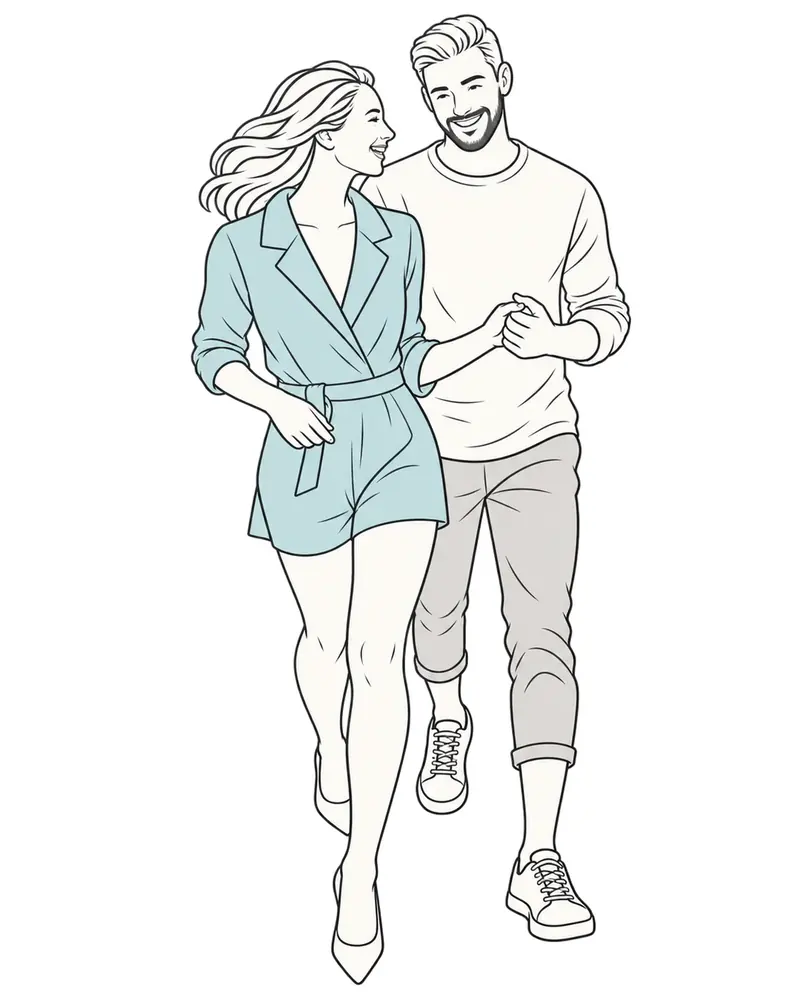
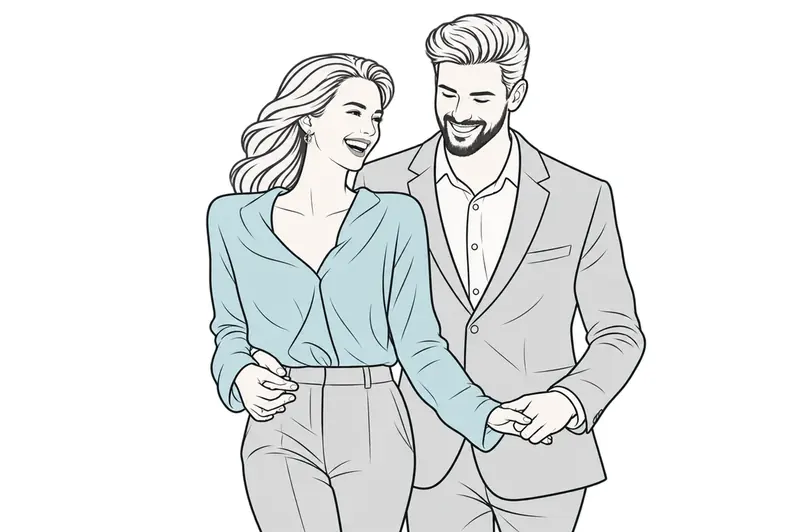
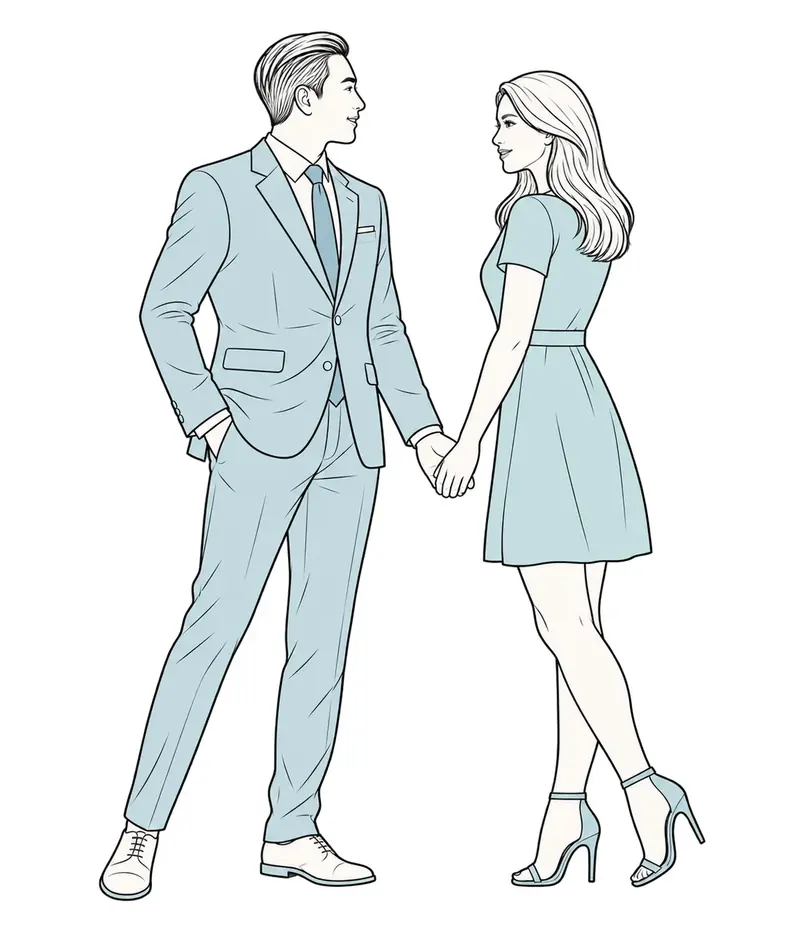
1. Walk together
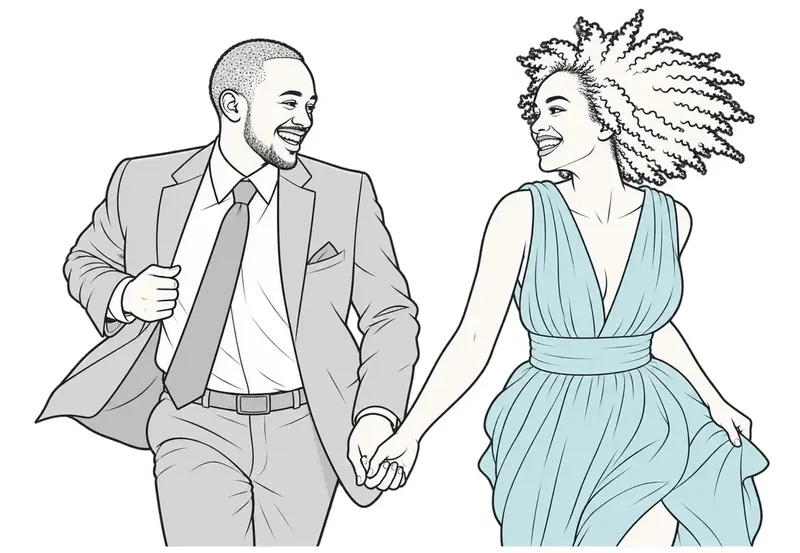
Hold hands and take a few easy steps at the same pace. Look at each other, look ahead, or follow your photographer’s cue. Leave enough room for your legs to move without pulling on the joined hands.
Hands and feet: keep the shared grip light and let your elbows bend. The free hand can rest near a pocket, hold a lapel, or gather a small amount of fabric. Short, comfortable steps are easier to repeat than an exaggerated stride.
Try a variation: walk close with an arm around the waist, as in the second example. If running feels like you and the clothes and ground allow it, add a few playful steps. You can get plenty of variety from an ordinary walk.
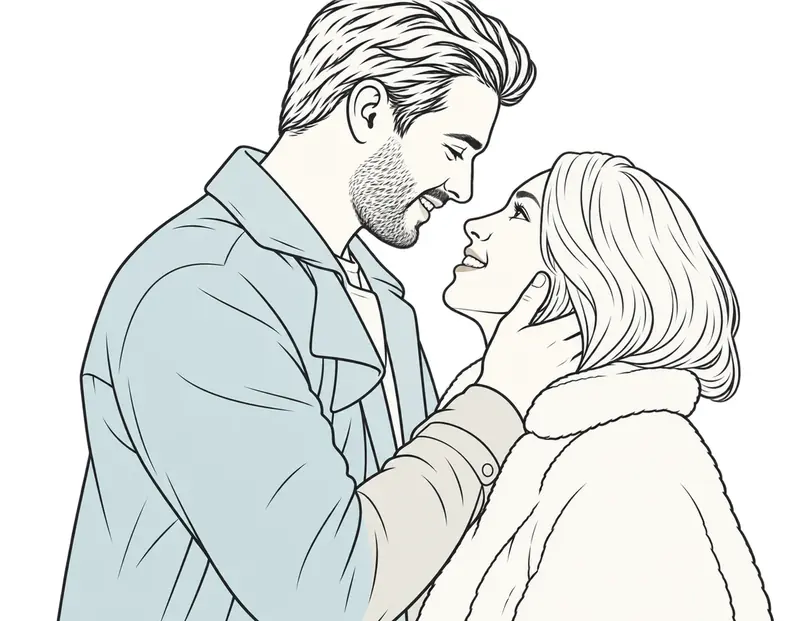
2. Stand close, facing each other
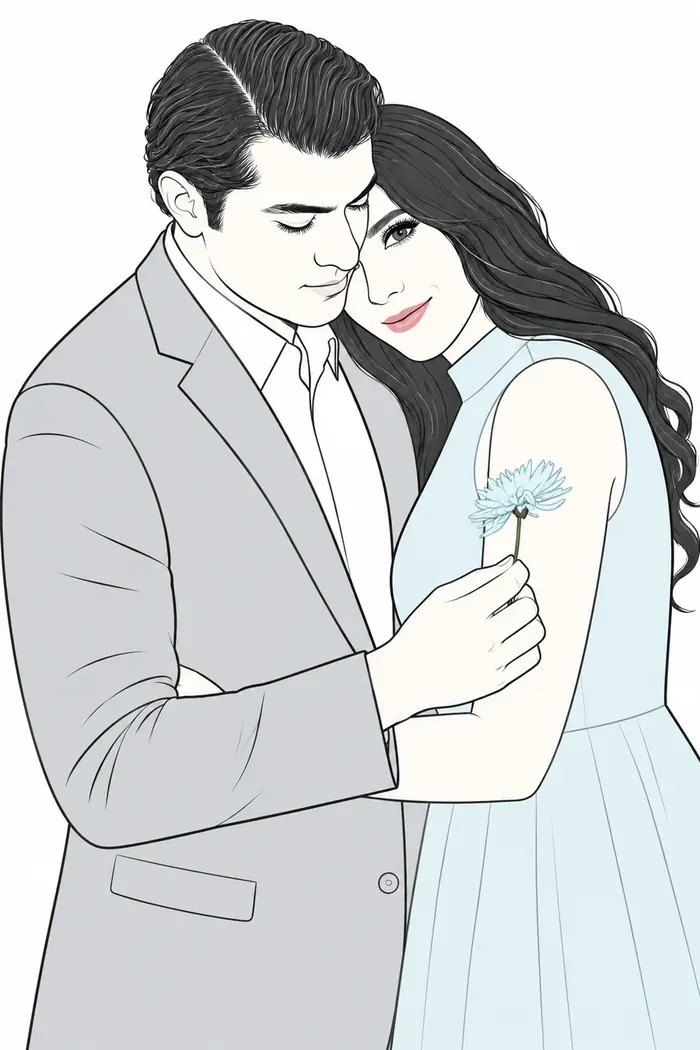
Turn toward one another and settle into an embrace you would actually enjoy. Bring your bodies close enough that you are not reaching forward from the waist, then let your shoulders soften. Look into each other’s eyes or lower your eyes toward your partner’s lips.
Hands and breathing: rest a hand at the waist, upper arm, shoulder, or gently beside the jaw. Keep fingers soft and pressure light. Breathe normally; a slow breath out can help release a held shoulder or a fixed expression.
Try a variation: leave a little more space and join hands low for an editorial standing portrait. A near-kiss can also make a lovely photograph. Your lips never have to meet.
3. Look at the camera together
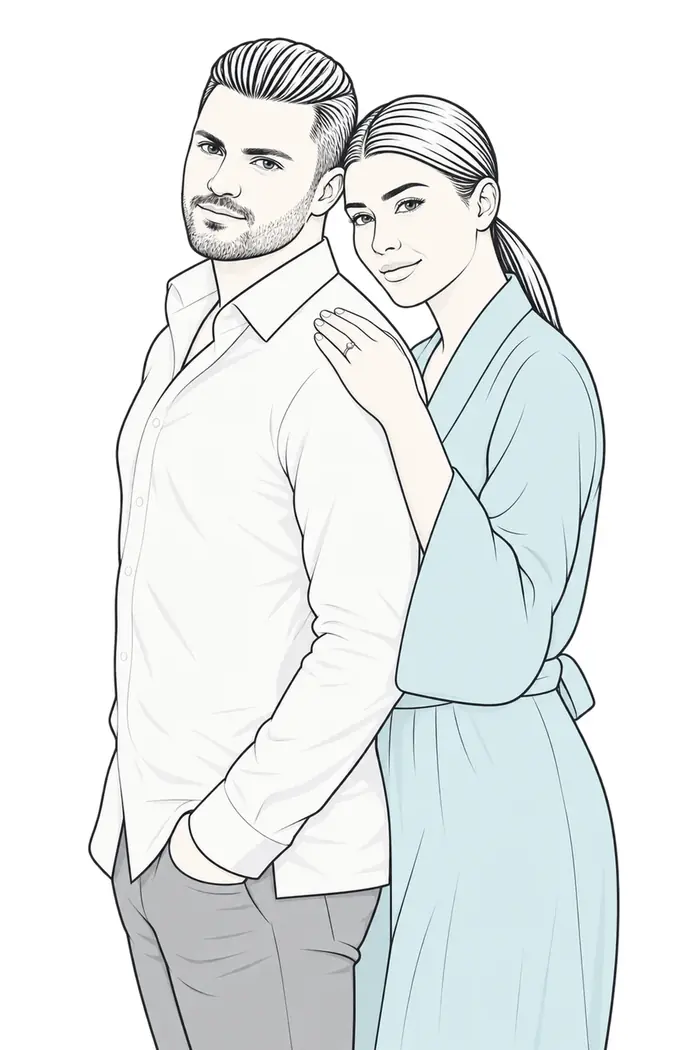
A portrait where both of you look at the camera belongs in the set. We affectionately call it the “parent pleaser.” Stand close, turn your bodies slightly, and let your faces come back toward the lens.
Hands and expression: give each hand a deliberate resting place. A hand on your partner’s shoulder, a relaxed hand connection, or a pocket can all work. Let your expression settle before adding a smile; it does not have to be a broad grin.
For an engagement portrait: the ring hand can rest on the nearer shoulder with the back of the hand gently turned toward the camera. Your photographer can check that the ring and both faces are visible.
4. Settle into an embrace
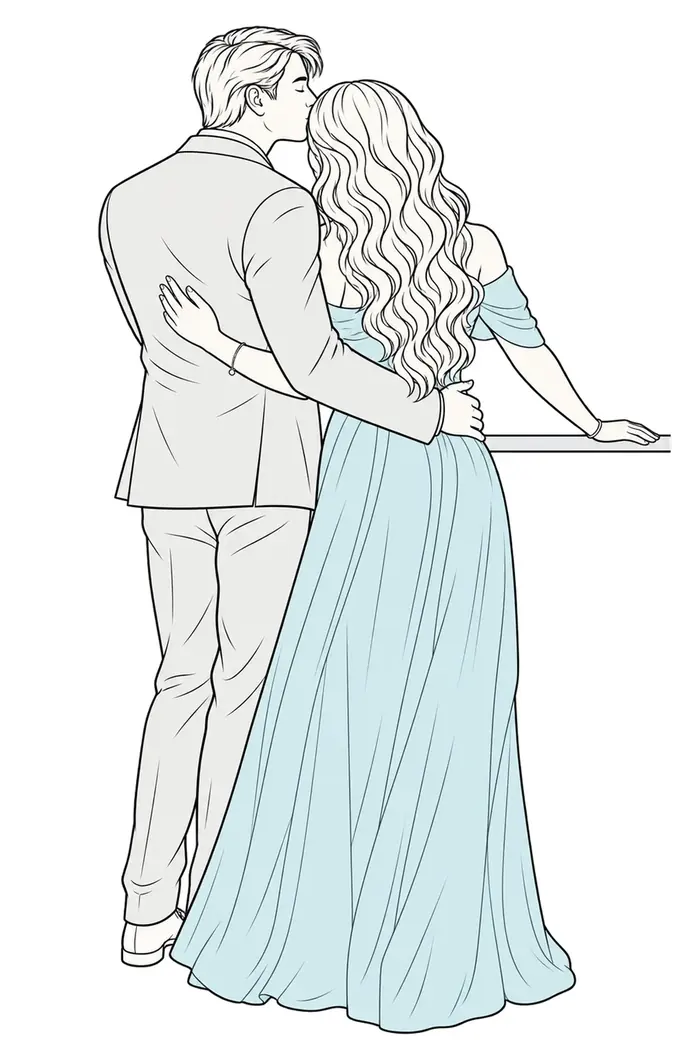
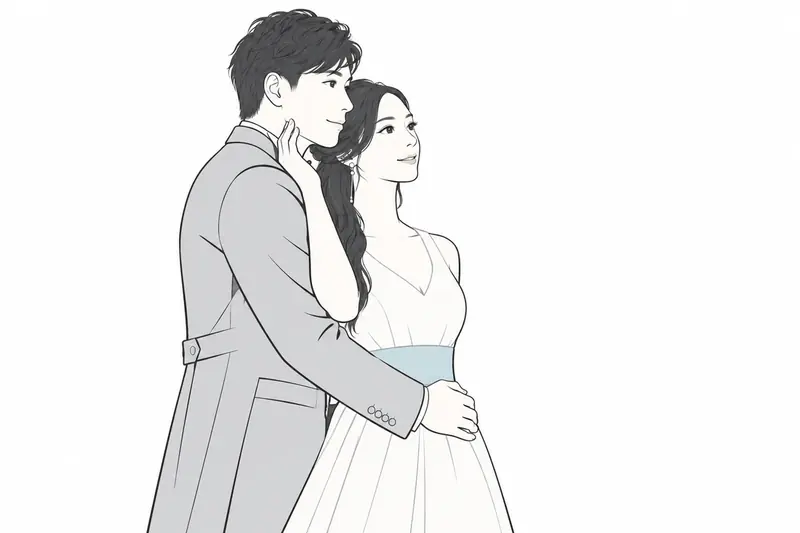
Stand beside each other or let one partner settle just behind the other. Connect at the waist, back, or shoulder in a way that feels comfortable. Leave your faces visible to the photographer rather than burying both of them in the embrace.
Give the free hand a home: it can rest over your partner’s hand, on an upper arm, or lightly on a railing. Your photographer will check that wrists, elbows, and hands form a clear connection.
Change the camera angle: a rear view can show the shape of the embrace and your outfits. For a close portrait, bring your heads gently together and let one person look toward the camera while the other looks down or toward their partner.
5. Sit together
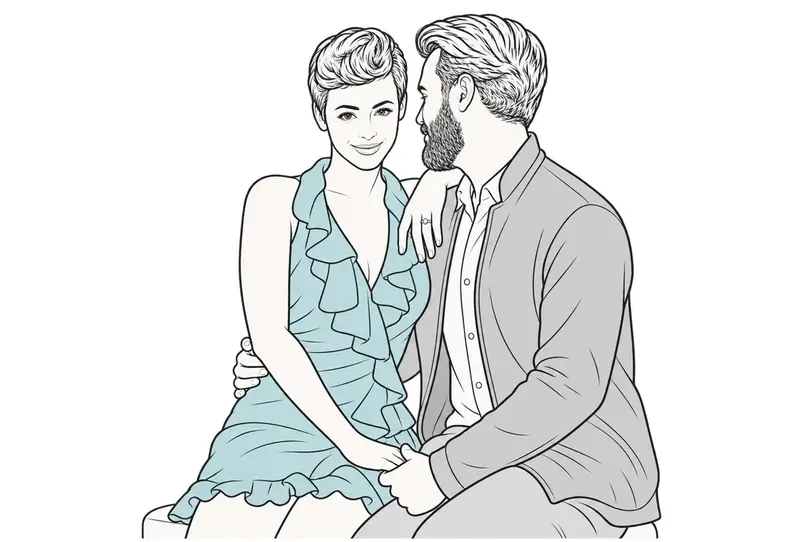
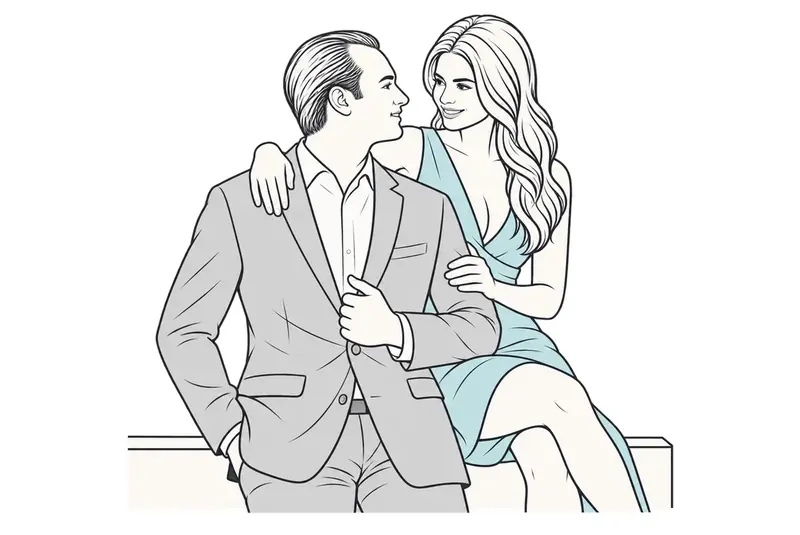
Choose a seat that lets you settle comfortably. Sit close, turn a little toward one another, and decide whether you both want to look at the lens or whether one of you will look toward your partner.
Hands and legs: connect at the shoulder or lap instead of letting both hands disappear between your bodies. Your photographer can adjust the direction of your knees and feet to the camera angle and what feels comfortable.
Try a variation: different seated heights create another arrangement. An arm over a shoulder and a light lapel hold give the hands a purpose. The seated, camera-aware example also works when you would prefer a quieter pace.
6. Turn toward the same point
Start beside one another, connect with an arm around the waist, and look toward the same point. A small turn of the shoulders or head can change the photograph while keeping the position easy to hold.
Keep it connected: stay aware of one another as you turn. A hand at the cheek or shoulder gives the portrait a clear point of contact. Your photographer can adjust your chins and the direction of your eyes from the camera’s position.
Add movement if you like: a gentle sway or slow turn can follow. Begin with a small movement, pause, and let the photographer refine it. You can make expressive photographs while remaining quite still.
The Small Adjustments That Make a Pose Work
The position gets you started. These are the details we watch while you enjoy each other:
- Hands: give each one a purpose. Relax the fingers, keep the wrist soft, and avoid squeezing an arm or gripping fabric so tightly that it becomes the focus.
- Feet and weight: stand in a way you can comfortably hold. A slight change in weight or foot direction can make the posture feel easier and clarify the line of a leg.
- Spacing: come close enough for the connection you want. Check that an embrace is not leaving your upper bodies reaching forward while your hips stay far apart.
- Breathing: keep it natural. When faces come close, you can feel your partner’s breath without holding yours or forcing an expression.
- Where to look and how to tilt your chin: decide where to look, then let your photographer refine the angle. Tell them if you have a side you prefer. A small camera or head adjustment can make a useful difference.
- Height, mobility, and clothes: adapt the arrangement to the two of you. Seated positions, a smaller step, or a change in camera height offer alternatives. A height difference does not need to be hidden.
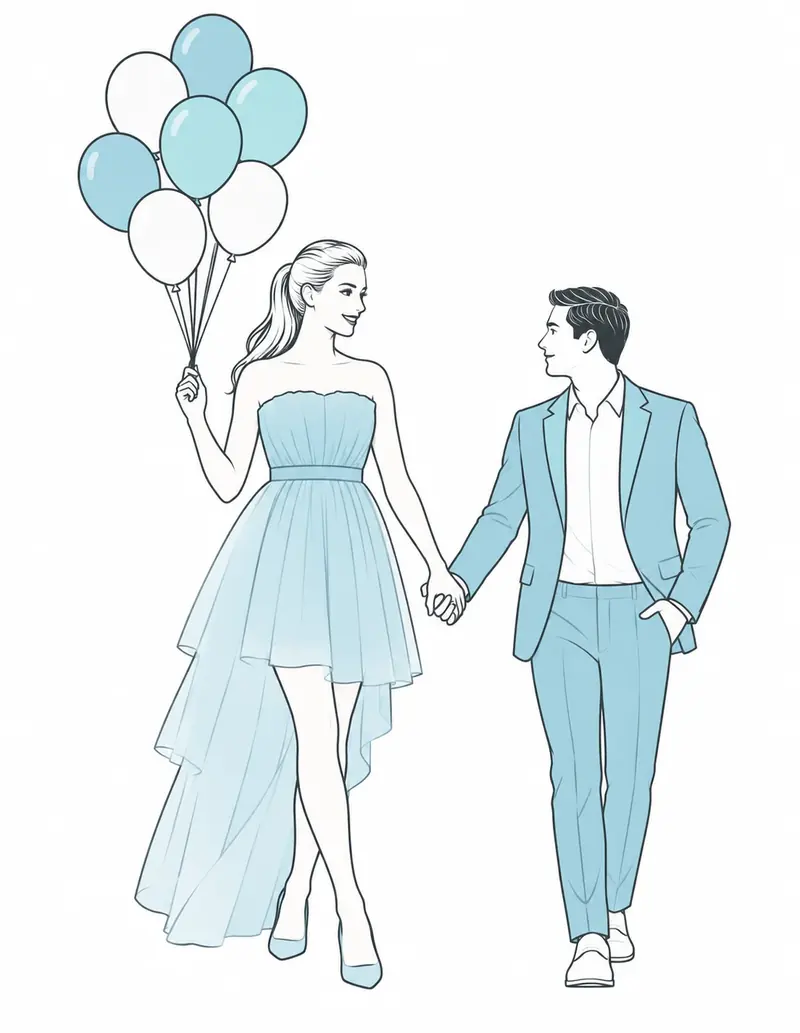
When one partner is shorter
To balance a height difference in a photograph, place the shorter partner a little closer to the camera, with the taller partner slightly behind. If the gentleman is shorter, he takes the nearer position. The person closer to the lens appears larger, so this small change in placement can help balance your proportions.
Keep your posture comfortable and your hands connected. Your photographer can refine the distance, camera height, and angle while checking that both faces remain clear. You can make beautiful photographs at any height; this is one useful option when choosing how you would like to look together.
If you bring a prop, keep it clear of your faces and the hand connection. In the balloons example, the outside hand carries the strings while the inside hand stays connected to the partner.
How to Kiss Naturally in Photos
Make it real, and let the photographs follow. You know your partner’s scent, their warmth, and the little imperfections you love all the more because they are theirs. Come close, tease each other a little, and enjoy that familiarity.
Connect, enjoy, and ease apart. Look into each other’s eyes, let your eyelids close softly as you come together, enjoy the kiss, then draw back just enough to find each other again. There is no need to hold one position while wondering whether the photographer has the shot. A few kisses, a smile between them, and a little playful anticipation give us much more to photograph.
- Keep the angle flattering. Stay upright or incline your faces gently toward the photographer, with the small turn you need to meet. Lean toward each other rather than pulling your upper bodies away. Tipping your heads back can show the camera the undersides of your chins; we would rather see those softly closed eyelids and the expression around them. Your photographer can guide the exact angle.
- Enjoy the moment before. The instant before your lips meet can be even more powerful than the kiss. Stay close, keep breathing, and let that anticipation show. It leaves the viewer a little room to imagine.
- Be playful. Try a kiss on the forehead or neck, a gentle lip bite if you both enjoy it, or even a butterfly kiss. Tease, kiss, pull back, and let the smile or laughter happen. Choose what feels like the two of you.
- Keep moving for film. When video is involved, a frozen kiss quickly looks staged. Connect, enjoy, ease apart, and reconnect. That movement gives your filmmaker a believable sequence, while your photographer catches the changing expressions.
Kissing is optional. If it feels too private or does not fit your culture, tell your photographer. Chemistry can show in a hand at the waist, a shared smile, the way you lean toward each other, or a quiet look. Your comfort sets the level of affection.
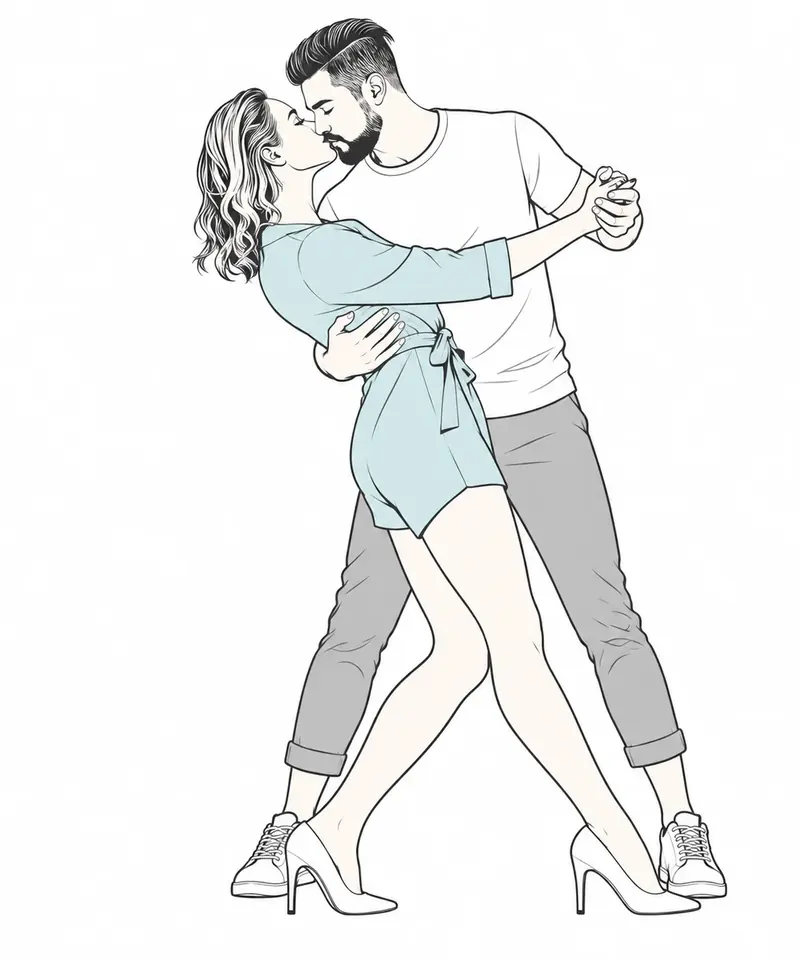
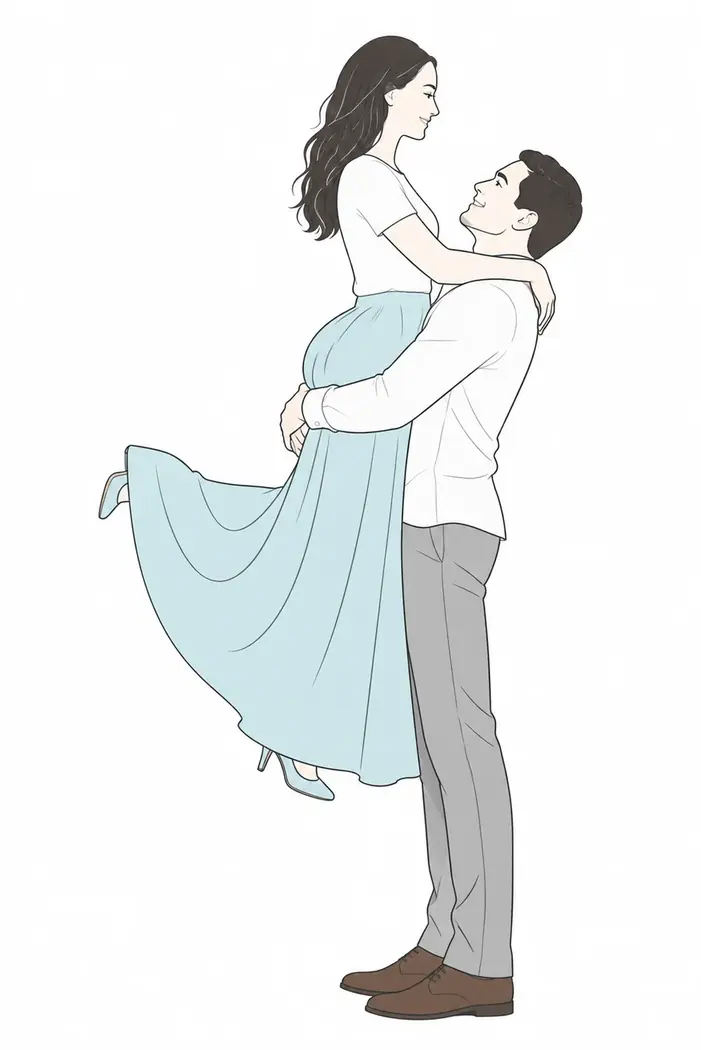
Dips and Lifts: A Little Direction Goes a Long Way
Choose these if you enjoy them. A shallow dip or a small lift can be every bit as expressive as a larger movement. Tell your photographer what feels comfortable, then establish the position together before adding a kiss or a laugh.
For a dip: begin with a stable stance and a clear supporting hand at the back. Keep the movement small enough to control. Your photographer can refine the extended leg, the joined hands, and the angle of the faces.
For a lift: keep the connection close and the support steady. The person being lifted can stay long through the upper body, turn the eyes gently toward their partner, and let one leg bend naturally if it feels comfortable. The exact grip and movement need to suit the couple.
Engagement Photos: Let the Ring Show
Tell your photographer you would love the ring included. A camera-facing portrait with the ring hand on a shoulder is an easy starting point. A close embrace or a relaxed hand detail gives you another option.
Turn the back of the hand slightly toward the camera, keep the fingers soft, and let your photographer check the ring’s position. You can show the ring while keeping the photograph about the two of you. The camera-facing example above shows one way to do it.
How Our Photographers Guide You
You will hear clear directions for both partners. We begin with a position, look at what the camera sees, and adjust the hands, feet, spacing, and angle. Then there is room for your conversation, a small movement, or a laugh.
A walking portrait might sound like this:
“Take a few easy steps toward me and look at each other.”
“Keep that hand connection soft. Let your free hand rest on your jacket.”
“Good. Stay close, take a breath, and keep talking.”
Those are examples of the kind of direction we give, rather than a fixed script. If a pose feels too formal, too affectionate, or simply unlike you, tell us. We can change the position and keep the session fun.
We did our engagement shoot with Vincent and had so much fun! Vincent made us feel comfortable and knew what he was doing by giving us poses and paid attention to detail.
— Meagan Roa · Engagement photography with Vincent · Visited October 2019 · Google review excerpt
The illustrations are AI-assisted adaptations of our photographs, designed to make the positions easier to see.
Your Couple Photoshoot Questions
Do we need to practice poses before our photoshoot?
No. Choose two or three examples you like and share what appeals to you: the closeness, the expression, the movement, or the overall mood. Your photographer can guide you during the session. There is no routine to memorize.
Will the photographer tell both of us what to do?
Our photographers guide both partners, including your hands, feet, where to look, how close to stand, and small changes in posture. If you are booking a photographer elsewhere, ask how much direction they give and look for complete couple sessions that show the approach you enjoy.
What if one of us does not enjoy having photos taken?
Mention it before the session. A comfortable pace, short instructions, conversation, and a simple walking or seated position can make a useful starting point. Tell your photographer what you enjoy and what feels uncomfortable so they can adjust the approach.
Can we have couple photos without kissing?
Absolutely. Walking hand in hand, an arm around the waist, a shared look, or a portrait facing the camera can all show closeness. You choose the level of affection that feels like you.
How do we smile without forcing it?
Breathe out, let your jaw settle, and turn your attention toward your partner or follow the photographer’s cue toward the camera. A small smile, a thoughtful expression, and a laugh can all belong in the same set. You do not need to hold one expression throughout the session.
Can we bring examples of photos we like?
Yes. A small selection is useful. Explain what you like in each photograph so your photographer can adapt the idea to you, your clothes, the light, and the setting. The references are a starting point for your own photographs.
Your Couple Photoshoot in Paris
If Paris is where you would like to make these photographs, we would love to meet you. Our English-speaking photographers will help you find a comfortable starting point, refine the small details, and enjoy the session together.
Explore the couple photoshoot page for the session options and practical planning details. Bring the examples you like; we will help make them yours.