
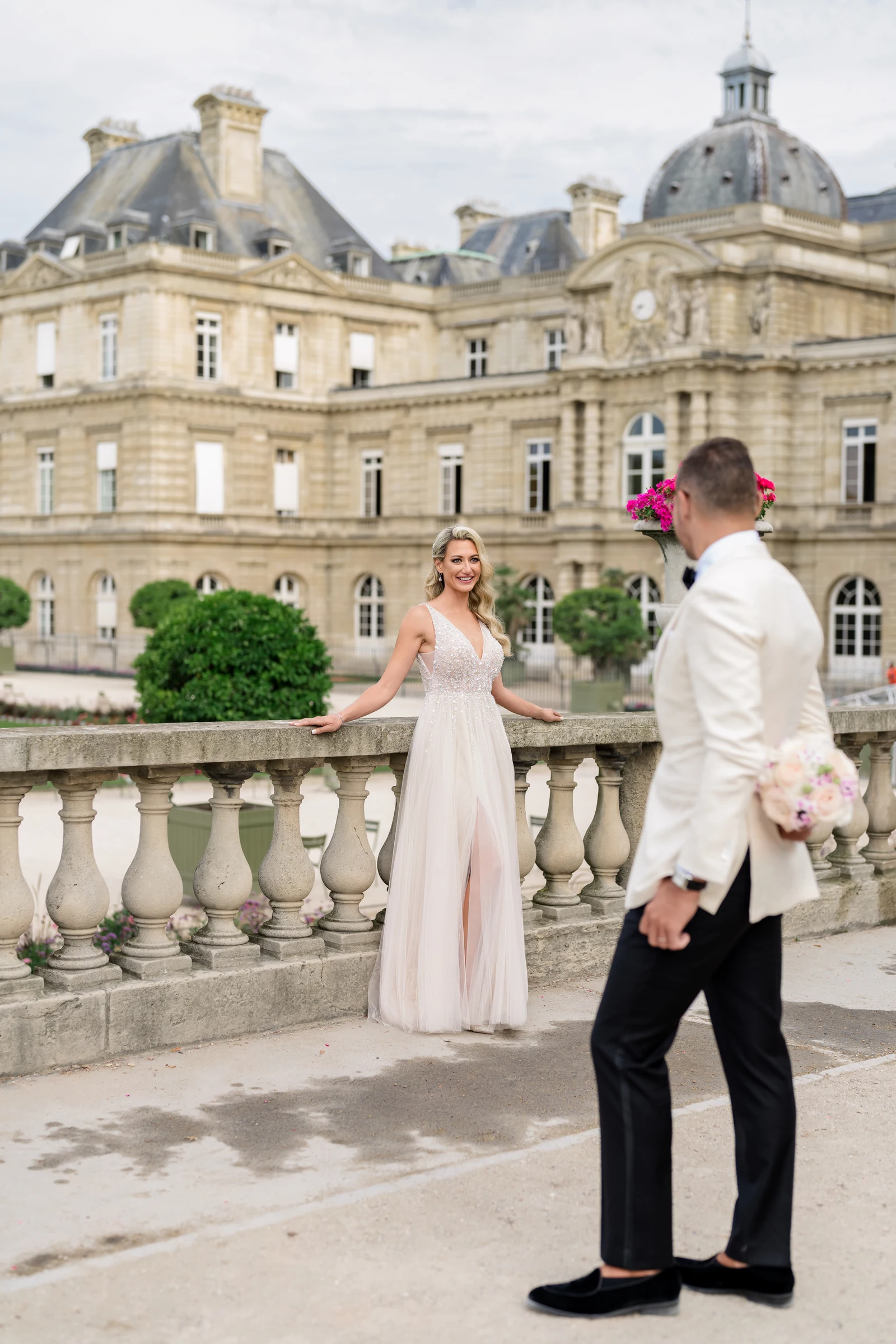
PARIS ELOPEMENT GUIDE
How to Elope in Paris
A wedding for two, or a few people you could not imagine leaving behind. Start with the setting, the ceremony, and how you want to spend the day together.
On this page
A wedding day, on your terms.
You may want vows with the Eiffel Tower in view, a long lunch at your favorite Paris address, or a private terrace where your parents can hear every word. An elopement leaves room for all of those choices. The useful question is what matters enough to build the day around.
Most of our international couples complete the legal marriage at home and exchange symbolic vows in Paris. From there, three decisions lead the planning: a public setting or a private venue, just the two of you or a few guests, and how much of the day you want someone else to organize.
This guide helps you make those decisions before booking. For the full civil-marriage requirements, use our guide to getting married in France. For a team to plan the celebration, see our Paris elopement planning service.
Choose your setting.
Public Paris or a private venue?
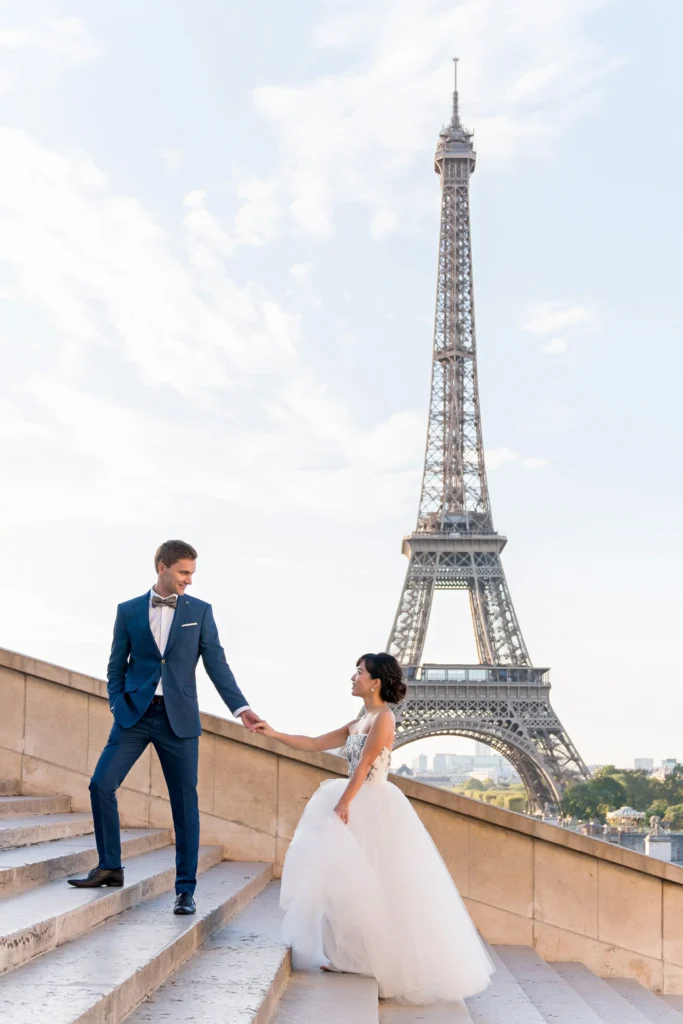
A public setting lets the city be part of the ceremony: river traffic passing below a bridge, the first cafés opening, the Eiffel Tower behind you. You share that setting with everyone else. An early start can help at busy landmarks, but it cannot reserve the space or guarantee an uninterrupted ceremony.
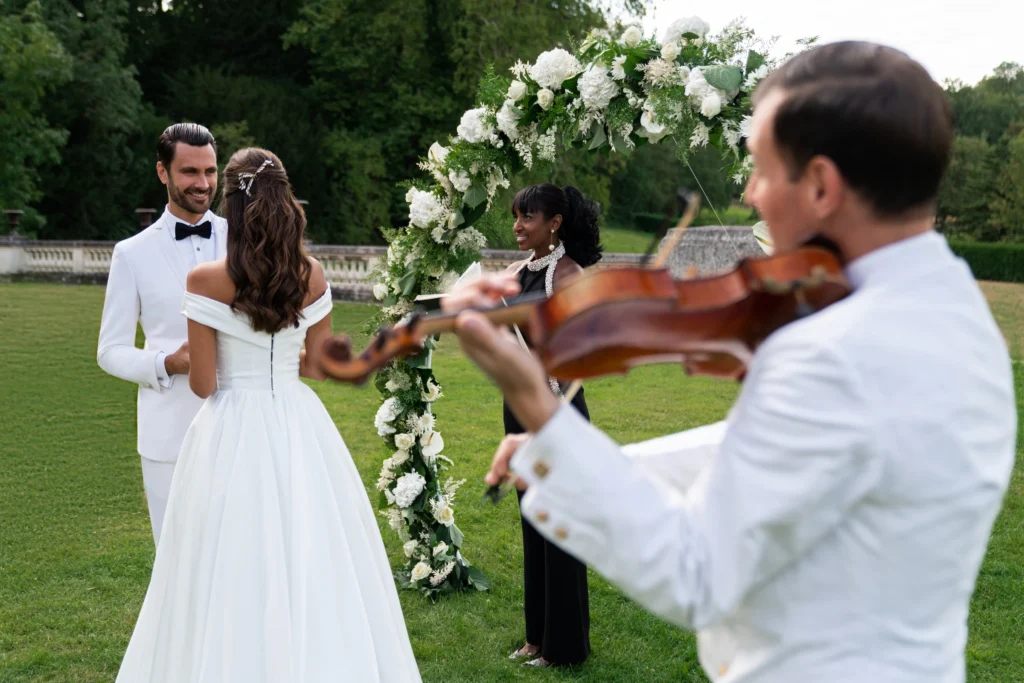
A private terrace, hotel salon, garden, or château offers more control over arrivals, seating, music, and dinner. Confirm exactly which area is exclusive, for how long, and what happens in bad weather. A hotel booking alone does not automatically authorize an event.
Shangri-La Paris is one option for a hotel elopement. Our elopement planners can help you choose a ceremony setting and plan the celebration around it. Availability, event arrangements, and any accommodation requirements are confirmed for your date.
| Your choice | What to settle before booking |
|---|---|
| Public location | Check opening hours, access rules, ceremony permissions, the size of your group, and a suitable alternative. Keep the setup modest and the route realistic. |
| Private venue | Confirm event permission, exclusive access, guest and supplier capacity, setup and removal time, noise rules, and a usable indoor alternative. |
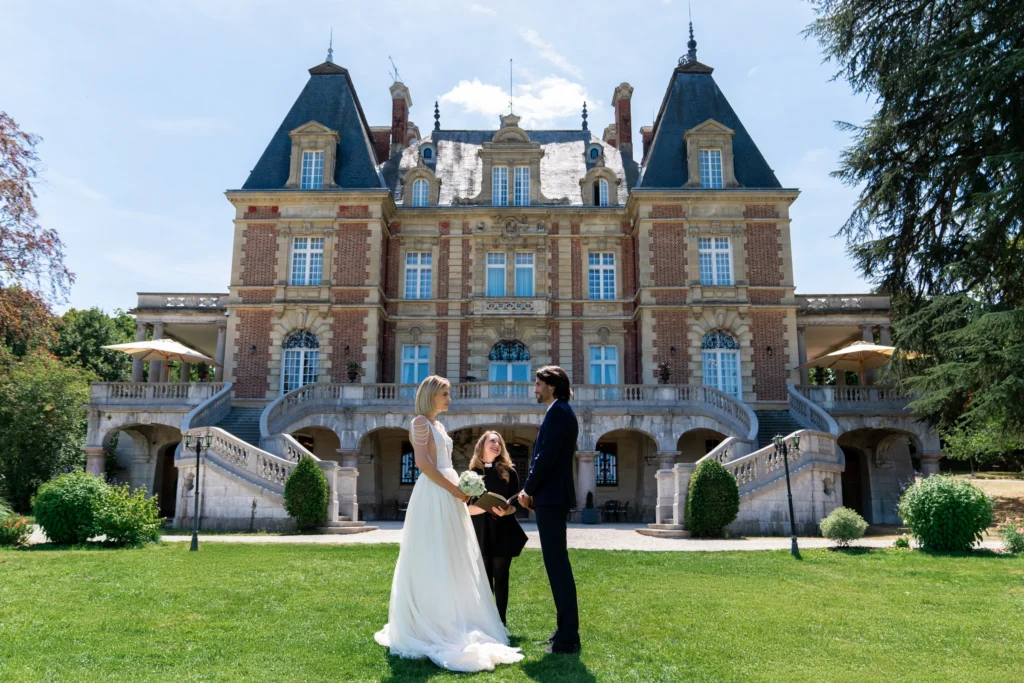
| Château outside Paris | Allow for travel in both directions, supplier access, the spaces included, and whether the booking is an event rental, an overnight stay, or both. |
Two people, or a small circle?
There is no guest number that decides what you are allowed to call your day. A few guests do change the practical work: chairs, transport, drinks, restrooms, accessibility, and somewhere comfortable to wait while you take portraits. Make their day as clear as yours.
If you are planning a reception with a larger guest list, our Paris wedding guide covers the wider hosting decisions.
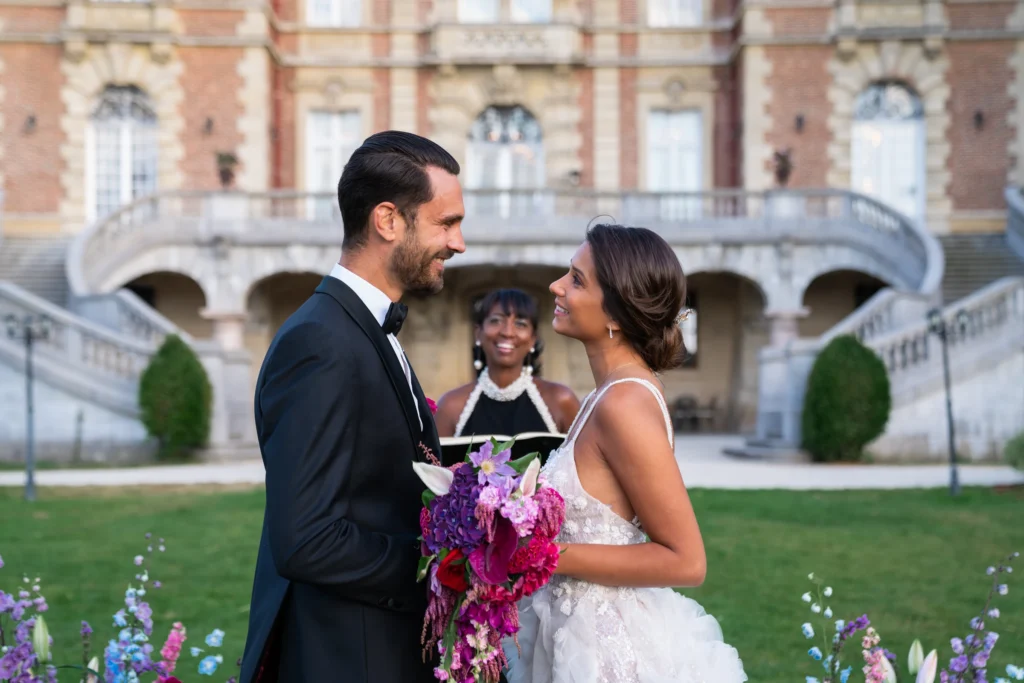
Make room for the vows.
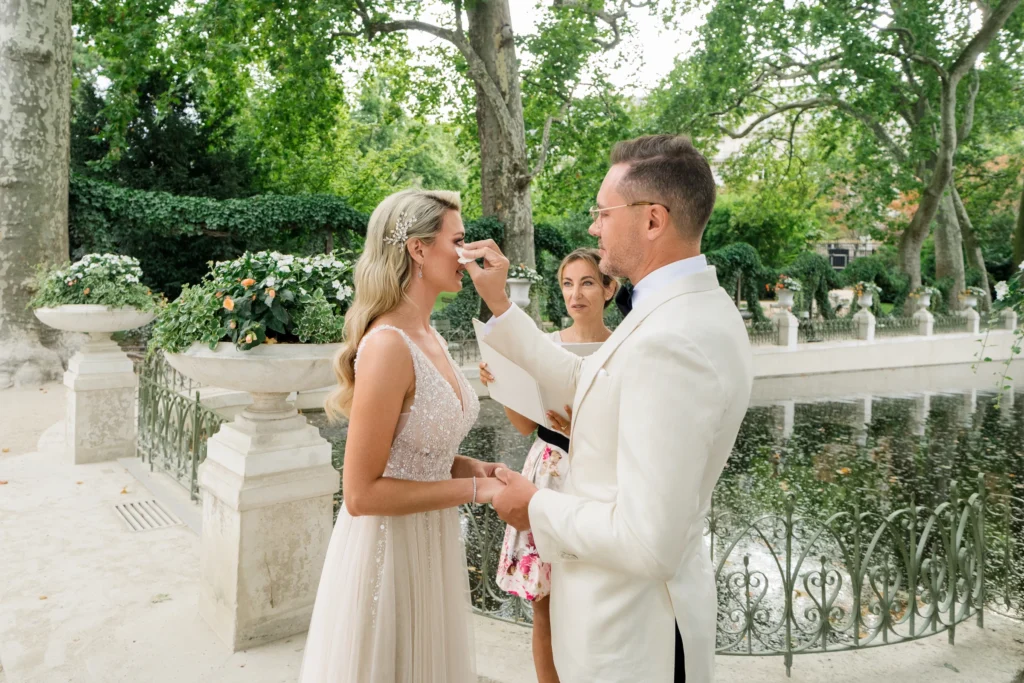
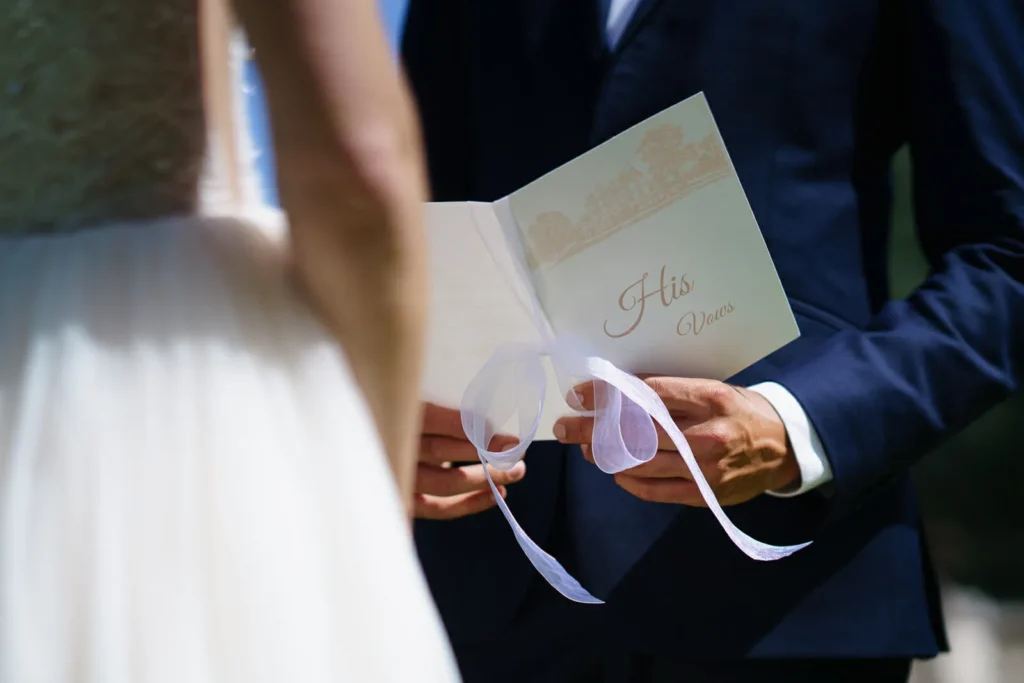
A symbolic ceremony in Paris does not create a legal marriage. It gives you freedom to choose the words, language, celebrant, and setting, subject to the location’s rules. You can write personal vows, exchange rings, include a reading, or keep the ceremony short.
A French civil marriage follows a separate process through the mairie. Eligibility can depend on a qualifying home or residence belonging to either partner or a parent; a holiday booking is not enough. Confirm your situation with the relevant mairie. Our France marriage guide explains eligibility, documents, timing, witnesses, and recognition abroad with official sources.
Before confirming a celebrant, discuss the ceremony length, the language you both understand, any cultural or religious elements, and who will hold the rings. Ask how they work with the photographer, too. During your first kiss, a thoughtful step to one side makes a difference.
Build an honest budget.
Venue access is often the biggest difference between a simple city ceremony and a private celebration. After that, the budget grows with the number of people, the hours each supplier needs, the flowers, and what you add around the ceremony.
| Budget area | Include in the comparison |
|---|---|
| Venue and planning | Event rental or suite requirements, planning fee, supplier access, staffing, and any required insurance or permissions. |
| Ceremony and flowers | Celebrant, bouquet and boutonnière, ceremony arrangements, delivery, setup, and removal. |
| Photography and film | Coverage time, travel between locations, getting-ready coverage, ceremony, portraits, guests, and dinner. |
| Beauty and transport | Hair and makeup, an early call time if needed, vehicle hours, passenger capacity, and waiting time. |
| Food and your trip | Meals, drinks, cake, service charges, accommodation, flights, attire, and alterations. |
Ask for itemized quotes and clarify VAT, deposits, overtime, cancellation terms, and weather arrangements before comparing totals. A low headline price is not a full budget if the services you need sit outside it.
For photography rates and coverage choices, see Paris elopement photography. For a complete plan and an estimate based on your choices, speak with our planning team.
Choose the right help.
You do not need every supplier on every elopement. You do need to know who is responsible for bringing the pieces together.
- Celebrant: develops and leads the symbolic ceremony.
- Photographer: documents the ceremony and guides your portraits, locations, and light. Explore our elopement photographers.
- Hair and makeup artist: confirms the preparation time and where they will work.
- Florist: supplies the personal flowers and any approved ceremony or dinner arrangements.
- Driver: helps when the route, formalwear, weather, or guests make walking impractical.
Photographer, coordinator, or planner?
For a simple ceremony for two in one public setting, you may be comfortable booking the suppliers yourself. A photographer may offer practical suggestions or limited coordination; ask what is included rather than assuming.
An on-site coordinator manages agreed arrangements on the day. Full-service planning starts earlier: developing the day with you, finding a suitable venue, selecting suppliers, tracking the budget, agreeing contracts, and directing the celebration. Private access, guests, several suppliers, and dinner often make that broader role useful.
Our Paris elopement planner page is the place for the service itself. This guide helps you decide how much support you want.
Choose a date that fits.
| Season | What to plan around |
|---|---|
| Spring | Longer days and gardens returning to color. Keep a rain alternative and avoid making a short blossom season the condition for enjoying your day. |
| Summer | Long daylight hours, potentially hot afternoons, and busy landmarks. Plan shade, water, and comfortable travel between stops. |
| Autumn | Changing foliage and earlier evenings. Keep the ceremony and portrait schedule tied to the daylight on your actual date. |
| Winter | Shorter daylight hours and colder outdoor conditions. An indoor ceremony, a few outdoor portraits, and dinner can make a comfortable combination. |
Before committing, check your venue and supplier availability alongside major events, holidays, and access restrictions. A quieter date is useful only if the people and places you want are available.
Do you have to start at sunrise?
No. Early light can be useful at busy public landmarks. Private venues and quieter settings may suit a later ceremony, and an evening celebration can lead naturally into dinner. Choose the time around the setting and the experience you want, then build in preparation and travel.
Give the day some breathing room.
Three ways the day can work
| Format | A practical sequence |
|---|---|
| A city ceremony for two | Get ready → vows → portraits along a short route → breakfast or lunch. Keep the locations close enough that you spend the day together rather than in traffic. |
| A private celebration | Get ready → ceremony at the venue → champagne and portraits → a pause → dinner. Confirm access and setup hours before fixing the schedule. |
| A few guests | Guest arrival → ceremony → group portraits and drinks → couple portraits while guests are hosted → dinner and clear departure arrangements. |
A break between the ceremony and dinner is often welcome. You can change shoes, touch up hair and makeup, call family, or simply sit together for a little while.
What to book, and when
- Start with the essentials: your date range, guest count, comfortable total budget, and public or private setting. Check the legal-marriage route separately.
- Secure the core bookings: venue permission and access, planning support if wanted, photographer, and celebrant. A fixed date or a particular private venue calls for earlier enquiries.
- Connect the details: accommodation, beauty, flowers, transport, dinner, vows, and a weather alternative.
- Before you travel: reconfirm the schedule, addresses, supplier contacts, payment deadlines, and what you need to bring.
Short-notice elopements depend on availability and flexibility. Start with the people and setting you can actually secure, then add the details that matter most.
Your questions, answered.
Can we elope in Paris without being legally married first?
You can hold a nonreligious symbolic ceremony separately from the legal marriage, before or after it. It has no legal effect. Religious ceremonies follow different rules; see our France marriage guide.
Can our parents or close friends come?
Yes. Choose a setting and schedule that work for the people you invite, including seating, accessibility, transport, and dinner. Small groups still need clear hosting arrangements.
Can we reserve a public landmark for our ceremony?
Do not assume that a public landmark can be reserved or made private. Rules vary by location and setup, and an authorization does not necessarily exclude other visitors. Confirm permission before paying suppliers or planning décor.
What happens if it rains?
Agree on a usable alternative before the day: a permitted covered setting, an indoor venue, or a schedule change everyone can accommodate. Confirm any extra costs and who makes the decision. A nearby café is not automatically an available ceremony venue.
Do we need to speak French?
You can plan a symbolic celebration with English-speaking suppliers. Confirm who handles conversations with the venue and local team. A French civil ceremony has separate language and interpreter requirements.
Can we book only the photographer?
Yes. If you are arranging the celebration yourselves, you can book elopement photography and confirm the coverage and any limited coordination directly.
How much should we set aside?
Begin with the setting, guest count, and services you want, then request current itemized quotes. Include the trip, attire, meals, VAT, and any early-start or overtime charges. Confirm the full total before committing.
Do we need a planner?
It depends on how much you want to organize yourselves and how many parts need coordinating. A simple ceremony for two can need limited support; private venues, guests, several suppliers, and dinner create a wider planning job.
When you are ready.
Tell us your date range, who you would like beside you, and the parts of the day you already know you want. It is equally useful to tell us what you are still figuring out.
Explore Paris elopement planning · Meet your photography team · Tell us about your day
A practical guide from Kiss Me in Paris.
Speak to us.
Your dates, your ideas, your questions — we’ll take it from there.