Paris Engagement Photo Tips: Timing, Photographer & Planning


Whether you’re planning engagement photos right after your proposal or coming back to Paris for a dedicated shoot, these three tips will help you get better photos and actually enjoy the experience.
We’ll cover choosing the right photographer, timing your shoot for the best light and fewest crowds, and planning your session so you spend more time in front of the camera and less time in transit.
(This guide pairs well with our Paris location guide.)
Choose and Prepare With the Right Photographer
This is the single decision that affects your photos — and your experience — the most.
The right photographer isn’t just technically skilled. They’re someone you feel comfortable with, who gives clear posing direction, and who knows Paris well enough to build a route that makes sense. Unless you’re a professional model, you’ll want someone who can guide you naturally and make the whole thing feel easy.

How to find them. Start with portfolios. Look at full sessions, not highlight reels — you want to see consistency, not just a few standout shots. Then check bios, reviews, and their general approach. The goal: a Paris-based photographer you trust to show up on time, prepare you well, and deliver engagement photos you’ll keep for years.
How to prepare together. A little coordination before the shoot changes everything.
Share Your Vision: Send inspiration images via Pinterest or WhatsApp — shots you love, photos of yourselves, poses and locations you want. This gives your photographer a clear sense of your style before you meet.
Let them plan the route. A good Paris photographer will build the itinerary—the best photo spots—around light, crowds, opening hours, and walking distance. This is where local knowledge matters — and where online research falls short.
Sort your details in advance. Have outfits, props, and any special items (save-the-date signs, rings, etc.) ready to go. For sessions of two hours or more, or across multiple locations, we recommend a Mercedes van with an English-speaking driver. It keeps your belongings safe, eliminates waiting for taxis, and gives you a private space for outfit changes — especially useful in winter.
Time Your Shoot Around Light and Crowds
When you shoot matters as much as where you shoot.
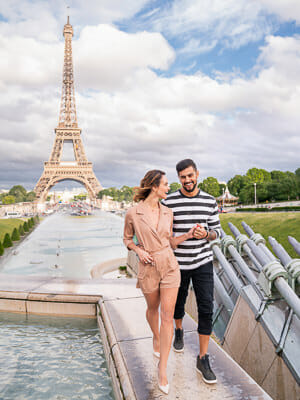
Sunrise. Start five minutes before first light. You’ll get soft, warm illumination and near-empty landmarks. In summer, that means 6:30 AM or earlier. In winter, closer to 8:30 AM. Popular spots like Trocadéro really only work well at sunrise — by mid-morning, you’re competing with hundreds of tourists.
Golden hour: The hour before sunset casts warm light that flatters skin tones and makes the Seine glow. Pont des Arts, Notre-Dame, and Luxembourg Gardens all look their best in this window.
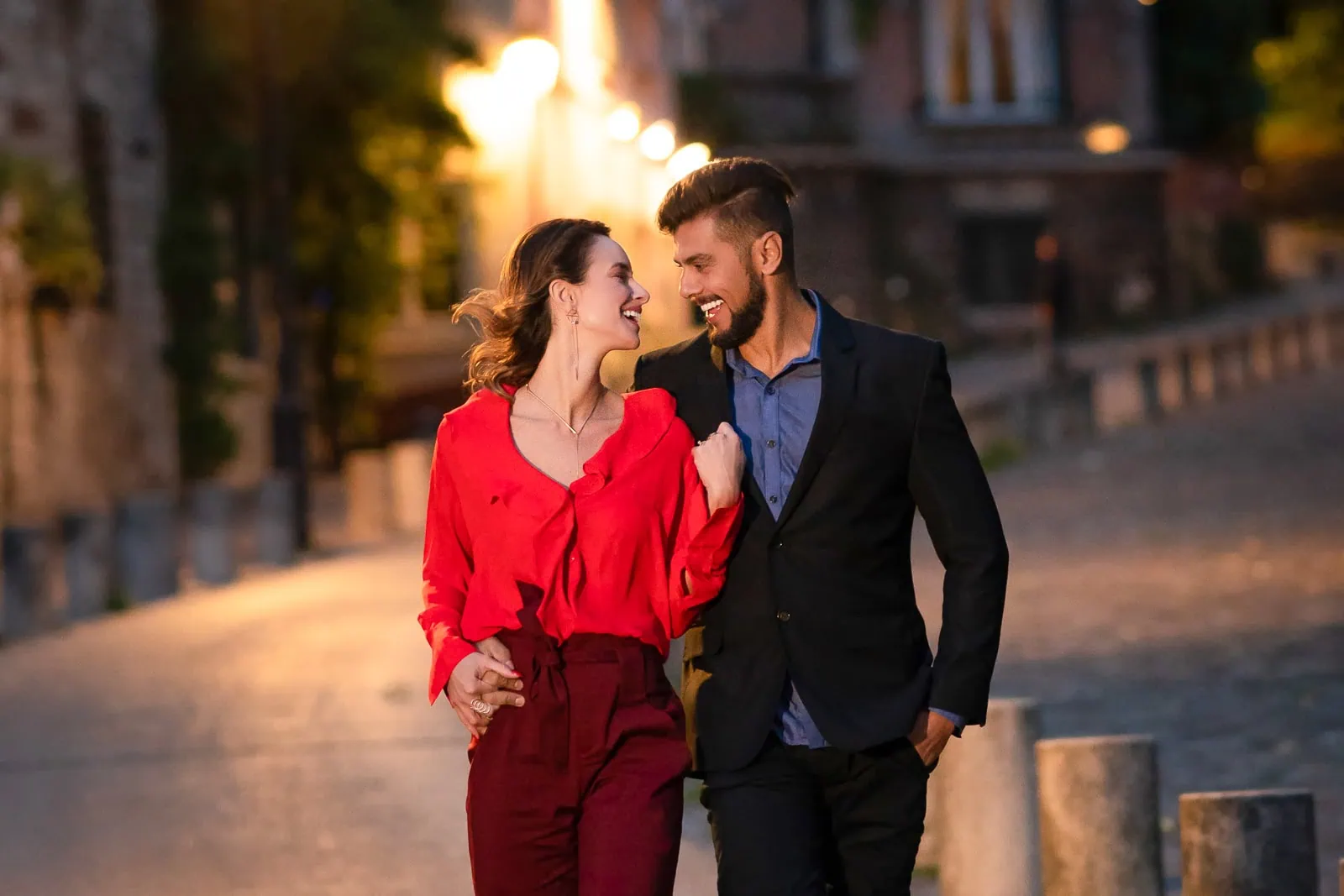
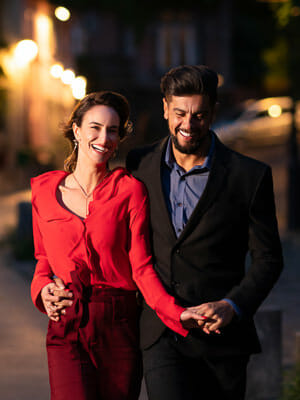
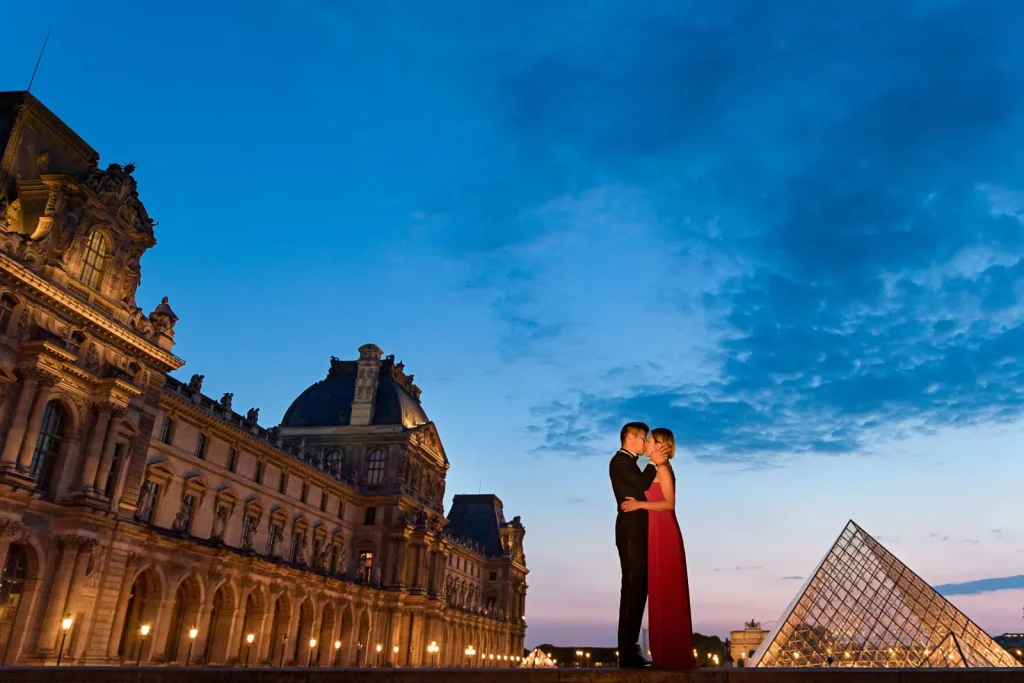
Blue hour: Twenty to forty minutes after sunset. Deep blue sky, city lights just coming on. This works well at the Eiffel Tower, the Louvre Pyramid, and Moulin Rouge — anywhere you want dramatic light.
Crowds. Shoot at sunrise any day of the week. Consider off-season months (November through February, excluding holidays and Valentine’s week). If a spot is busy, move to a nearby angle — Paris has no shortage of good backdrops
Plan Your Session for Maximum Coverage
Smart planning means more shooting time and fewer logistics headaches.
Calculate your net shooting time. Subtract travel and outfit changes from your total booked hours. You want at least 75 percent of your session spent actively shooting.
Cluster your locations. Group nearby spots — Notre-Dame to Pont des Arts to the Louvre, for example — so you’re walking five minutes between stops, not thirty.
Plan outfit changes carefully. Each change costs time. Skip the hotel round-trip. A café restroom works, a quiet corner works — the Mercedes van is the best option if you have one.
Build in 10–15 minute buffers between stops. Paris is walkable and full of opportunities between planned locations. Comfortable shoes make a real difference.
Three things decide how your Paris engagement photos turn out: the photographer you choose, the time of day you shoot, and how well you plan the session. Get those right, and the rest takes care of itself.