
Sur quel genou devriez-vous faire votre demande en mariage ?
Left works. Right works. We usually prefer the right knee.
In our preferred proposal positioning, you stand on the photographer’s left and she stands on the right. This keeps her left ring hand visible during the exchange and puts your right knee closest to the camera when you kneel.
The knee is only one part of good proposal posture. Your rear toe, spacing, posture, eye contact, jacket, and how you hold the ring box can matter just as much in photographs and film. All of it is within your control. A little forethought before the day, and making sure you, your photographer, and your planner are on the same page, moves the needle more than anything else.
These details do not change what the two of you feel. They change how the proposal looks in photographs and film, and how it is seen and remembered for years.
For the proposal speech, the four-word question, the ring exchange, and what happens after she says yes, see our proposal guide.
Why do we prefer the right knee?
With our preferred positioning, you are on the left of the frame and she is on the right. Going down on your right knee keeps your body open toward the camera and leaves her left ring hand visible.
The left knee works too. We prefer the right from that position.
And do not overthink left versus right. A clear view of the ring exchange, a rear toe pointed straight down, balanced spacing, and upright posture matter far more in the photographs.
If you switch sides, switch knees. Kneel on the knee closest to the photographer. That is the whole rule.
What if your right knee is uncomfortable?
A little discomfort from kneeling for thirty seconds is normal — no man is entirely comfortable down there, and it is a small price for something this monumental. Pain or the risk of injury is another matter entirely.
If you have an existing injury, or the right knee genuinely hurts, use the left. Comfort and safety come before a photographic preference every time. We would never recommend a position that risks hurting you.
Why is the left knee traditional?
Traditional proposal etiquette often says to kneel on the left, and many guides repeat that advice.
If tradition matters to you, use the left. From a photography perspective, left is not automatically better. The better knee depends on where the two of you are standing relative to the camera.
In our preferred positioning, that is the right.
POSITION FIRST, KNEE SECOND. Think of three roughly parallel lines: your chosen backdrop, the two of you, and your photographer and filmmaker. You are in the middle, facing one another. From the photographer’s perspective, you are on the left and she is on the right. Change sides, and the knee changes too.
How should you kneel when proposing?
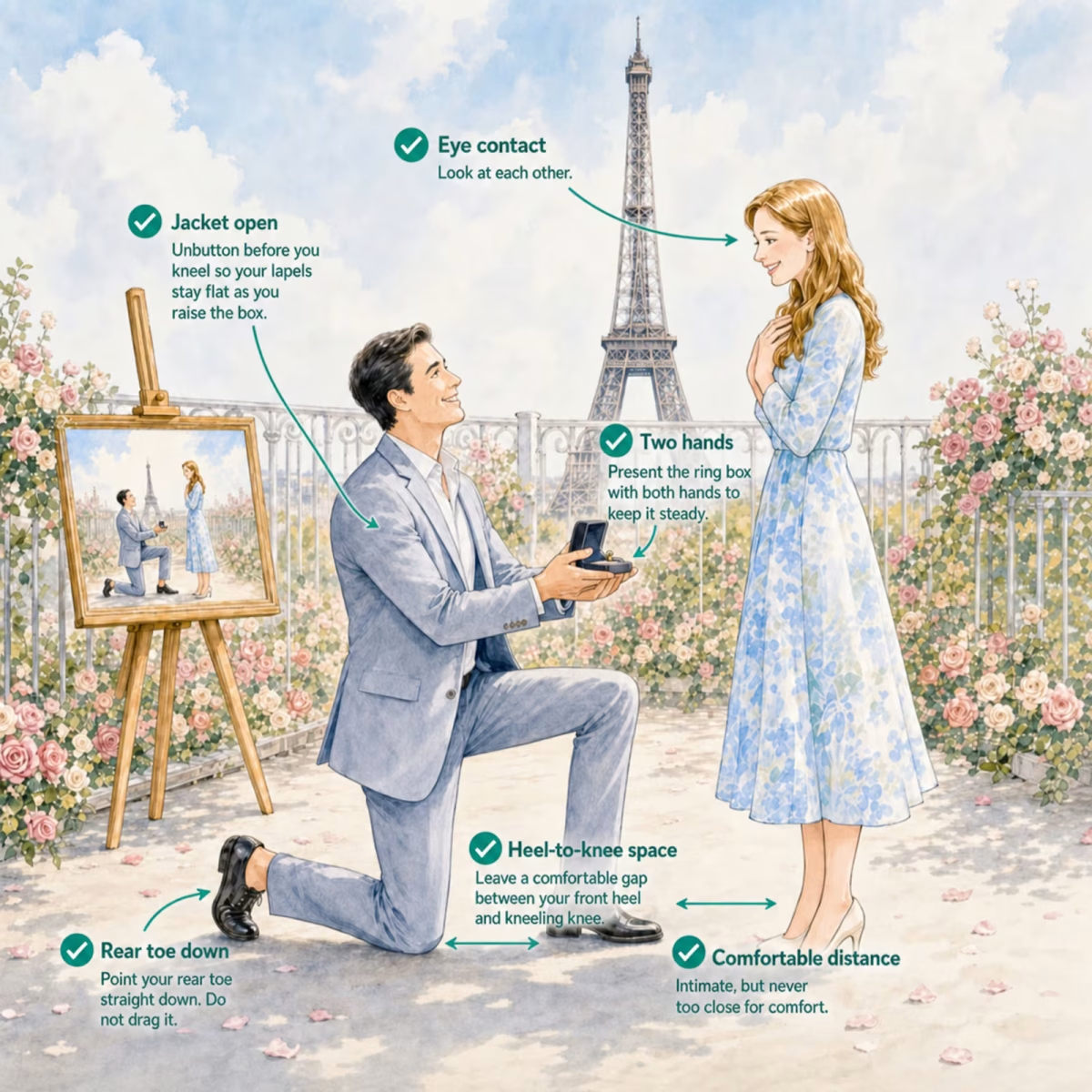
Stay upright, then work through the six details in the illustration above.
Rear toe down
Point your rear toe straight down. Do not let it drag or turn sideways behind you. Of everything on this page, this is the detail we correct most often, and the first posture problem you notice in a photograph.
Heel-to-knee space
Leave a comfortable gap between your front heel and kneeling knee. Too tight, and the legs overlap. Too wide, and the position looks stretched. The right spacing also makes it easier to stay upright.
Jacket open
Unbutton before you kneel so your lapels stay flat when you raise the ring box.
Two hands on the box
Present the ring box with two hands. It is steadier than one, and the frame looks calmer. A single hand has to balance the box while the lid swings open.
Eye contact
Look at her.
Comfortable distance
Stay close enough for intimacy and connection, with enough room that neither of you feels crowded.
Do not brace a hand on your front knee as you go down. It looks like you need help getting up, and both hands should be on the ring box anyway.
When should you switch sides?
If she has a preferred side
You know her best. If she usually favors one side of her face in selfies or family photographs, tell your photographer before the day.
We would rather photograph her the way she likes to see herself than keep the usual positioning solely to show the ring hand more clearly.
Switch her side, switch yours, and switch your knee. Kneel on the knee closest to the photographer.
Do not fight the wind
Wind is another reason to switch sides, and fighting it is a losing battle.
Think of a fashion shoot with a fan: the fan blows into the model’s face, never from behind her. Same idea here. It is rare that a breeze comes steadily from directly behind her, but when it does, her hair ends up across her face in every frame. If switching sides sends it back instead, we switch.
If your cover story gives you a natural reason to have her hair pulled back before you arrive, even better. Do not force it if it would make her suspicious.
Do you have to kneel when you propose?
No.
Kneeling is traditional, not mandatory. You can stand, sit beside her, or follow a family or cultural tradition where kneeling is not part of the proposal.
Tell your photographer, filmmaker, and planner beforehand so the coverage is planned around what you will do.
Where does the knee drop fit in the proposal?
One knee down with a ring box raised toward her is the image most people recognize as a marriage proposal, much the way the Eiffel Tower says Paris.
The knee drop is one part of the full proposal sequence: arrival and approach, positioning, the proposal speech, the four-word question, the ring exchange, the first reactions, and the Champagne toast.