
On this page
How to time a Paris proposal at night
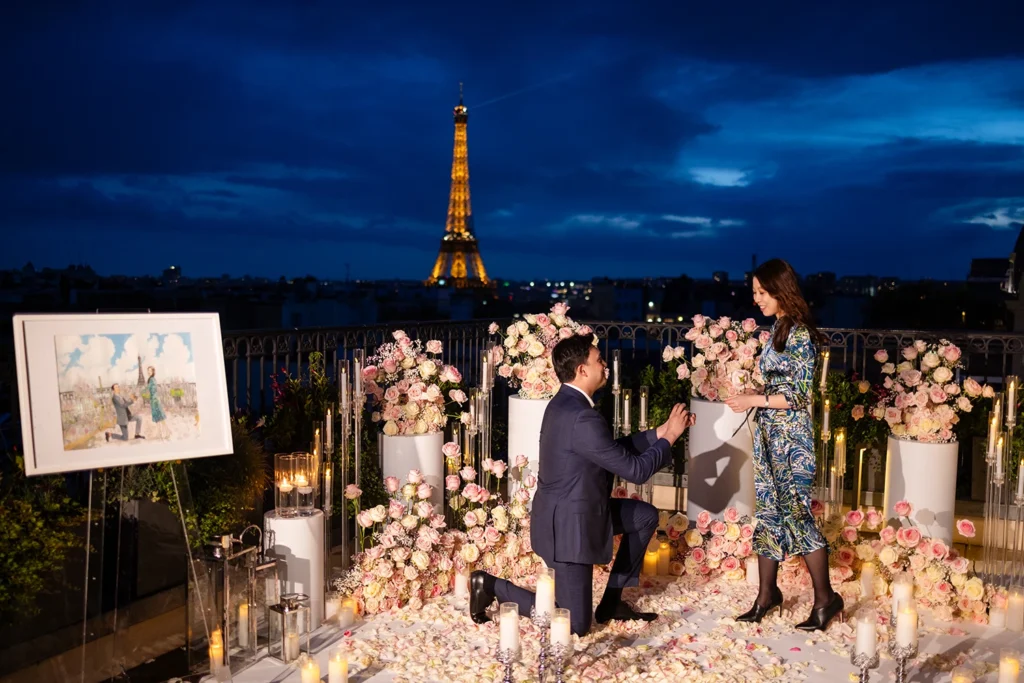
A Paris proposal at night needs a little planning around the light, the Eiffel Tower’s sparkle and dinner. The right start time depends on your date, your setting and what matters most to the two of you.
Blue hour gives you a deep blue sky and the city lights together. Full darkness puts more emphasis on candlelight and the illuminated Tower. We’ll help you choose the timing, then fit the rest of the evening around it. For portraits without a surprise proposal, see our Paris night photoshoot guide.
If you’re still comparing places, start with where to propose in Paris. If you know it’s Paris and you’re looking for an idea that suits the two of you, start with Paris proposal ideas.
Start with Paris sunset times for your exact date. Then allow for your arrival, the question, photographs and dinner.
What’s the best time for a Paris proposal at night?
Blue hour suits couples who want color in the sky and Paris lit behind them. Full darkness brings candlelight and the Tower into stronger focus. The best choice also leaves room for the evening you want.
A Paris proposal can happen in the golden light before sunset, at sunset, during blue hour, or after dark. Each gives you something the others don’t.
We love blue hour for a proposal — the deep blue sky, the city coming on, natural light still present in the photographs — and we’ll say so when you ask. But blue hour isn’t automatically the right call for your evening. Maybe the table at Le Jules Verne you waited three months for matters more than a deeper blue in the pictures. That’s a perfectly sensible choice.
So here’s how it actually works. We talk. We find out what matters most to the two of you, then look at what’s possible on your date: the light, the Tower’s schedule, dinner, the spaces and vendors available, how late an evening you really want. Sometimes that means trade-offs, and trade-offs are fine. You’ll understand them, you can ask what we’d do, and you make the call.
Golden hour, sunset, blue hour, or dark?
| Timing | Usually strongest for | Worth knowing |
|---|---|---|
| Golden hour | Warm natural light, portraits and photographs before dinner | The sun is low, so buildings can put a location in shade earlier than you’d expect |
| Sunset | The turn from warm light into evening; a natural point for the question or a first toast | The Tower won’t be lit yet — its lighting only comes on after dark |
| Blue hour | The balance we love: deep blue sky, Paris lighting up, ambient and professional light working together | It’s brief, so the team and the lighting are set before it starts |
| Full dark | Candlelight at its most romantic, the lit Tower, the sparkle | Plan photographic lighting before arrival, and confirm dinner and venue finish times |
Blue hour begins after sunset, as the sky deepens and the city’s lights start to show. In Paris the window is briefest around the March and September equinoxes and longest in midsummer, and the weather decides how much of the blue you actually get.
When does the Eiffel Tower sparkle?
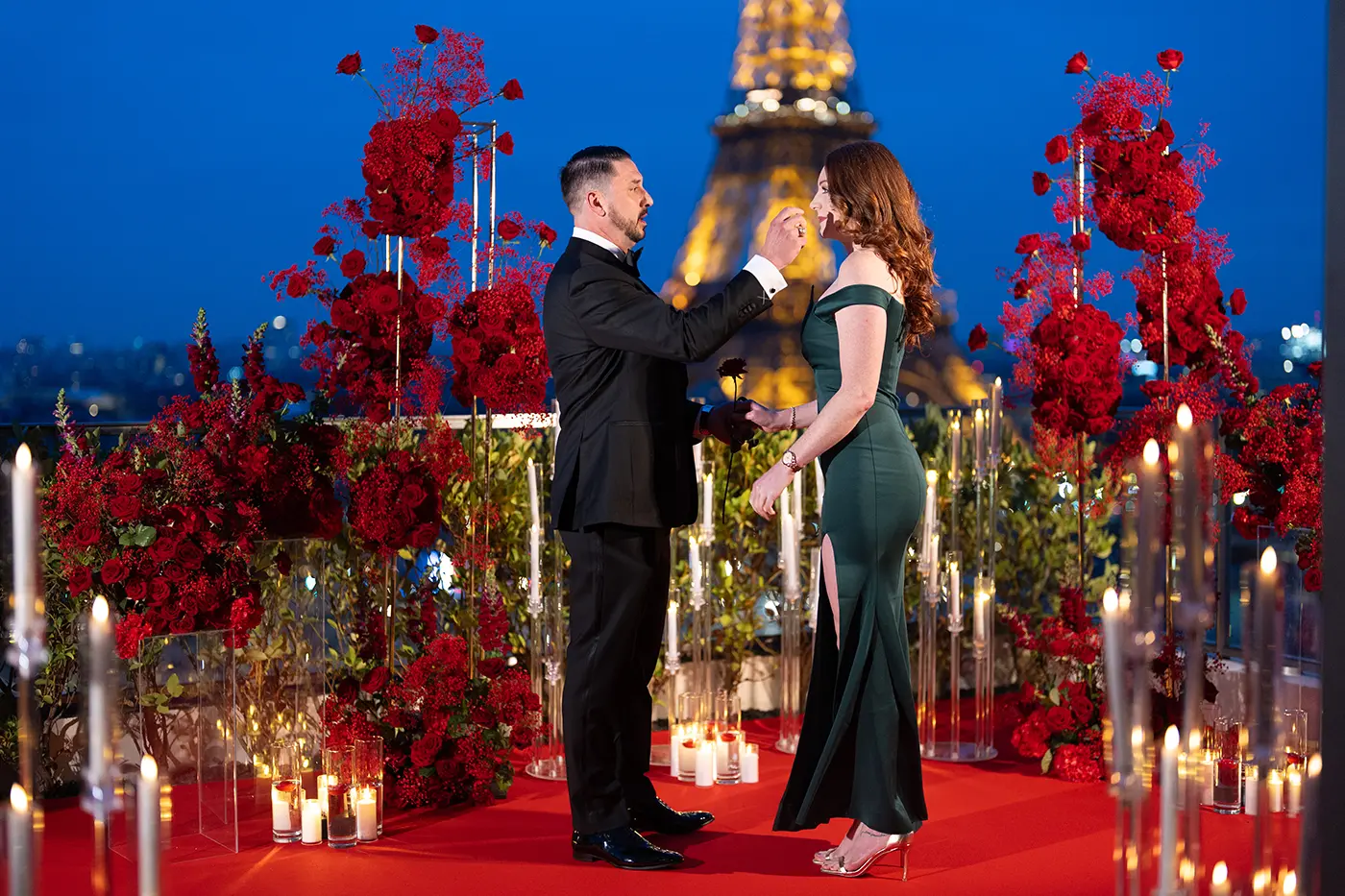
For five minutes at the start of every hour, once the Tower’s golden lighting is on.
The Tower doesn’t light up at sunset. Its golden lighting comes on after nightfall, switched on by light sensors, and the first sparkle is the next full hour after that. If night falls at 8:35 p.m., the lighting comes up within about ten minutes and the first sparkle is at 9:00.
So don’t guess the sparkle from a sunset time. When sunset falls close to the hour, the sparkle you’re expecting can turn out to be the next one. We check your actual date against the Eiffel Tower’s official lighting schedule. For the setting itself, see our Eiffel Tower proposal guide.
What time is the final sparkle?
Usually midnight. On late-closing dates, when the Tower is open until 12:45 a.m., the final sparkle is at 1:00 a.m. — and that one is different. The golden lighting and the beacon switch off first, leaving the white sparkle alone on a dark Tower. Confirm the closing time for your date before planning around the final display.
Can you propose during the sparkle?
Yes, and five minutes is more time than it sounds.
A proposal speech runs thirty seconds to two minutes. The approach and knee drop take seconds, not minutes. Add the ring, the yes, and the first kiss, and five minutes often still has change left.
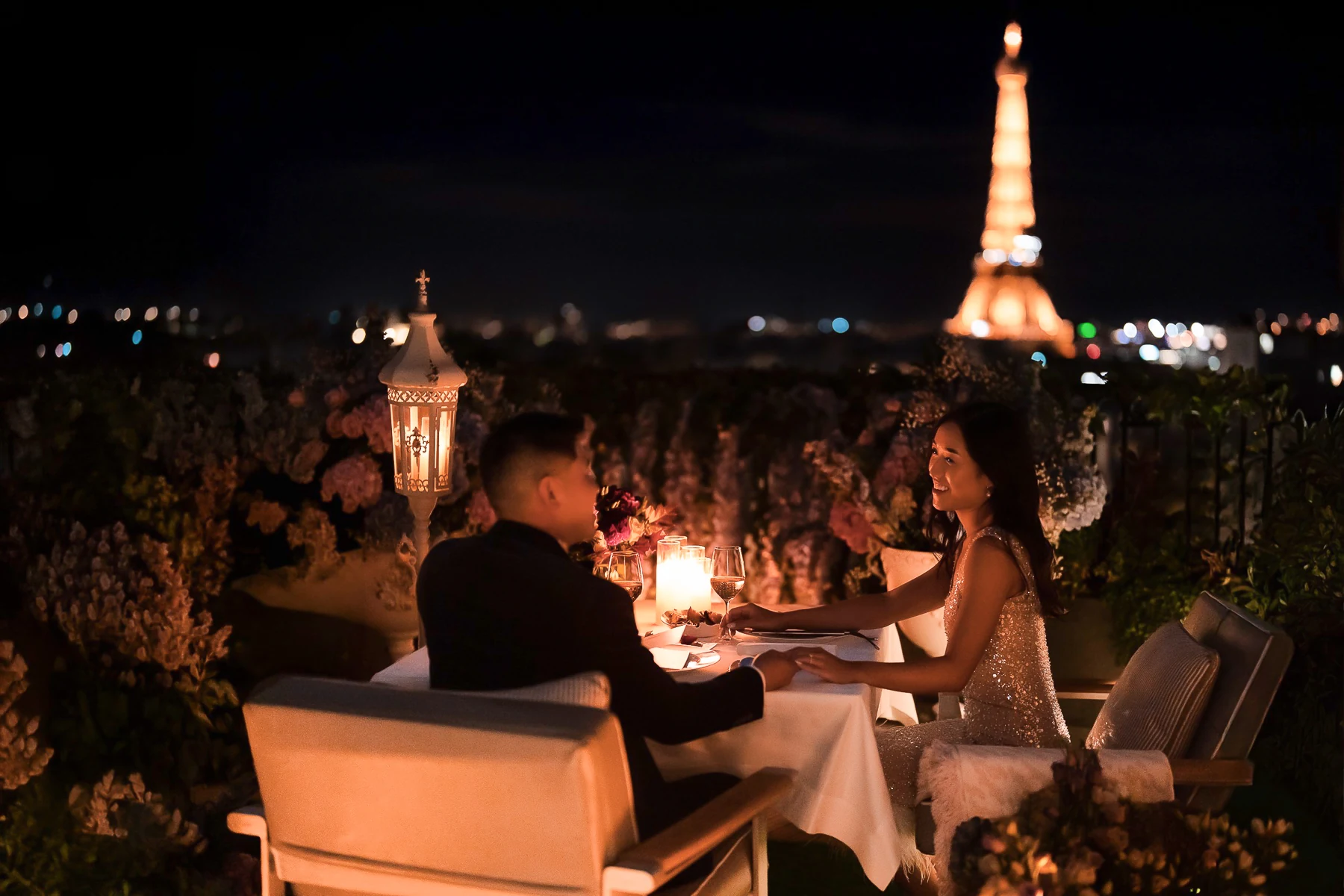
The real question is which moment you want inside the sparkle: the knee, the ring going onto her finger, the first toast — or none of them, with the sparkle saved for later in the evening. The Tower sparkles when it sparkles; you decide what it lights. If it’s the question itself, be in position before the hour. If it’s the ring or the toast, starting on the hour works just as well. We’ll tell you what we’ve seen work across a lot of evenings. The call is yours.
At Sonia’s birthday dinner at The Peninsula, the butler revealed the ring as the Tower sparkled at 10 p.m. The 11 p.m. sparkle was the cue to light her birthday candles.
A photograph records one instant of the sparkle; video shows the shimmer. If that movement matters to you, include a videographer in the plan. For still photographs, discuss the light and timing with your proposal photographer.
How does privacy affect the timing?
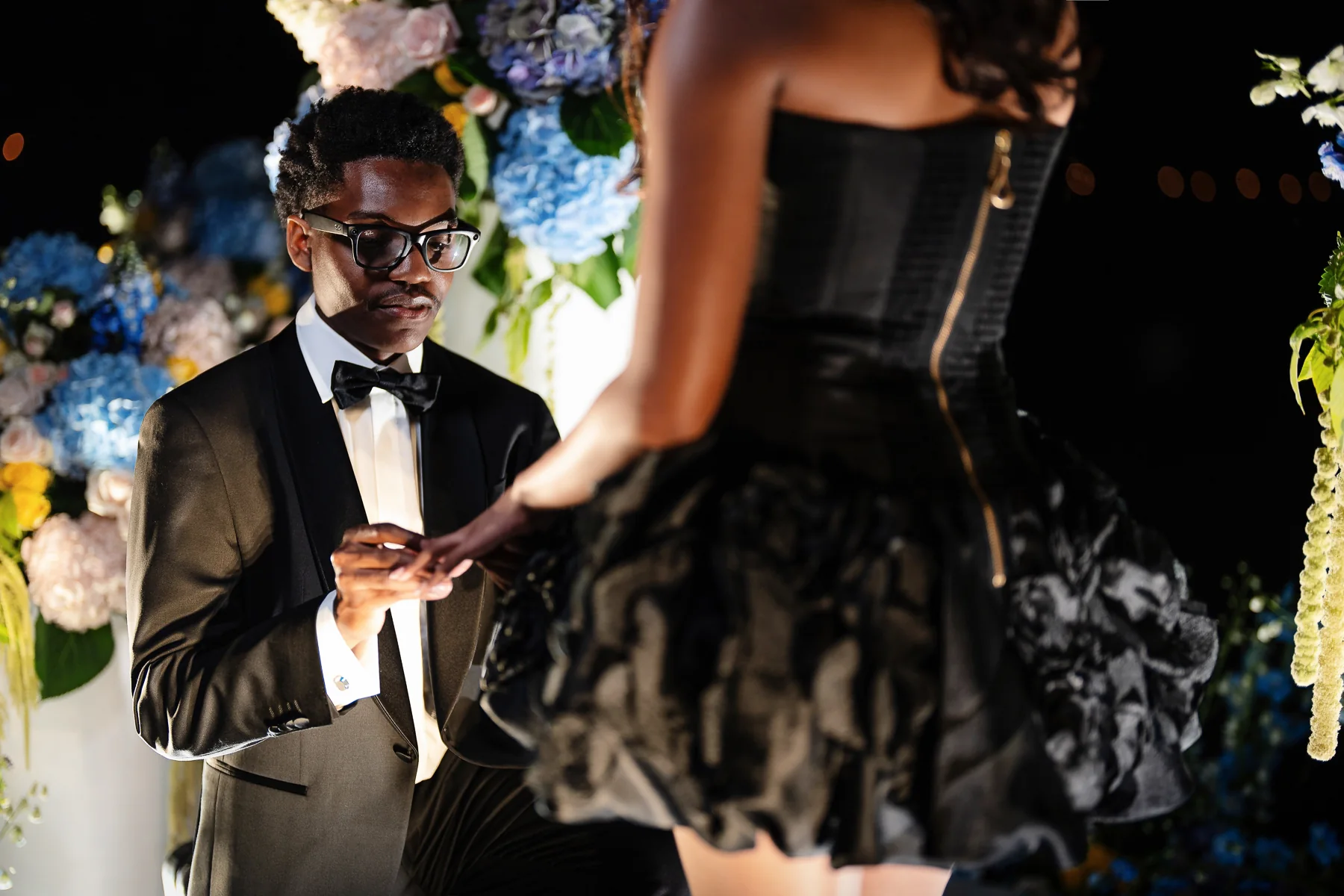
If privacy matters, the answer isn’t a later hour at a public spot. It’s a private space.
Public viewpoints change with the day, weather, holidays and plain luck. Trocadéro can be busy well into the evening, especially in summer and around major holidays. A later hour may give you more room. It cannot guarantee privacy. Our guide to where to propose in Paris compares the settings.
If you don’t want strangers a few steps away when you ask, choose a space reserved for you: a private rooftop, a terrace, a period ballroom, a privately chartered boat, an apartment or a château. Then the crowd stops driving the decision, and the timing gets chosen for the light, the dinner plan, and the venue’s own hours. Our Paris proposal planners arrange the space, the timing and dinner around it.
How the season changes the evening
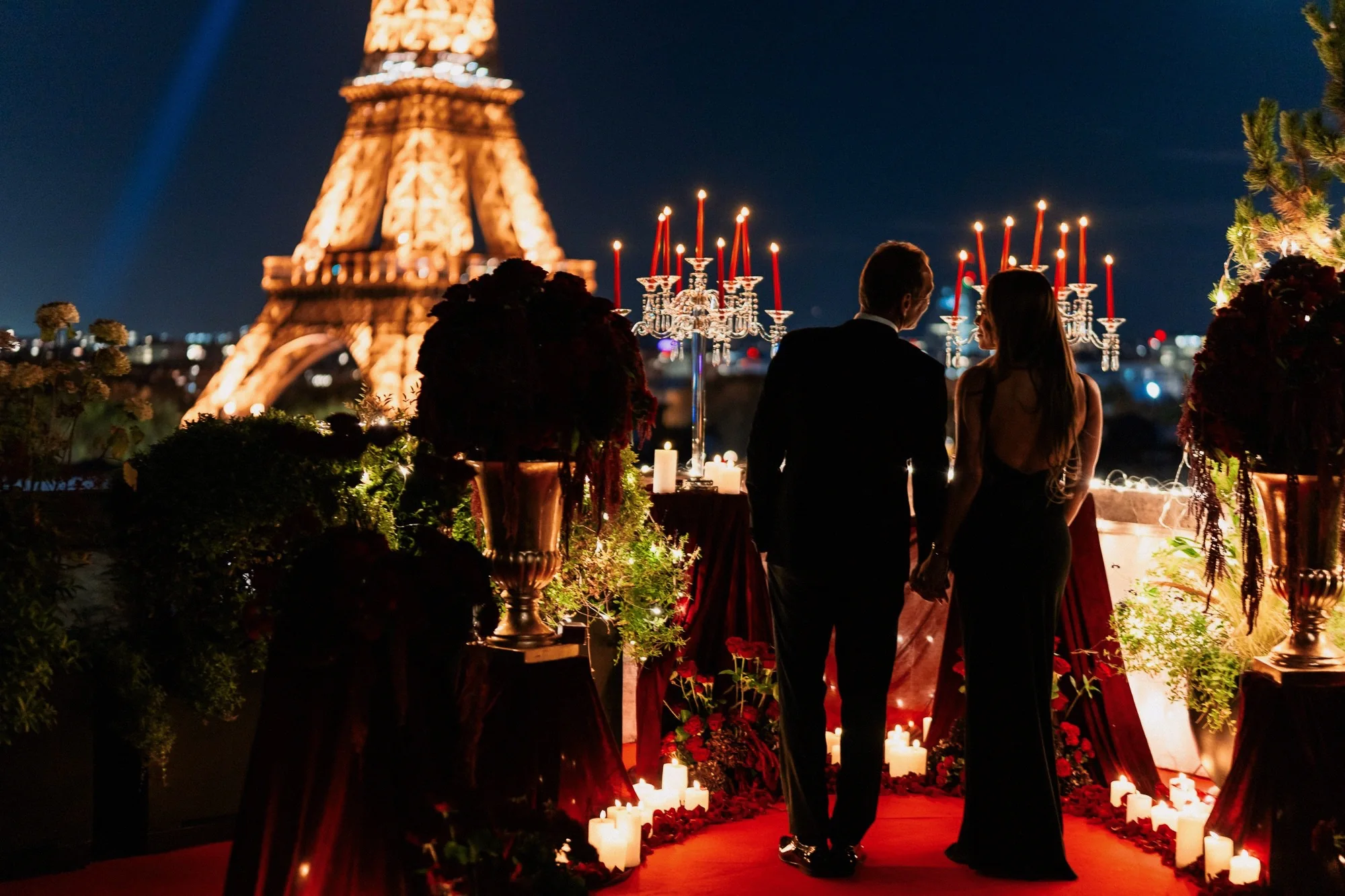
Sunset in Paris ranges from before 5 p.m. in early December to close to 10 p.m. in late June. The same dinner reservation can therefore call for a very different proposal time.
In December, an evening proposal happens after dark. You can ask at seven and still sit down to dinner at a familiar hour.
Late June is the opposite. A proposal timed to darkness or the first sparkle finishes late, and that has consequences for dinner — next section.
Sunset changes by several minutes a week in spring and autumn, and the clock changes at the end of March and October shift it by a full hour overnight. Check the exact date — the sunset link above — before you book dinner, vendors, or a boat. We do, for every evening we schedule.
Dinner: before the question or after?
Dinner isn’t an afterthought to a proposal. Where you ask, where you dine as a newly engaged couple, and where you spend your first night as fiancés are the three questions of the evening, and the timing has to work for all three.
The summer catch is simple: around the longest days of the year, a proposal planned for darkness or the first sparkle can end after many Paris kitchens have closed. That doesn’t rule out a late proposal. It means dinner is planned rather than assumed — a restaurant with confirmed late service, dinner at the same venue, a private chef, or a late supper at the hotel. Or the proposal comes earlier, and the light changes over dinner.
In winter the question flips: the proposal happens in the dark at seven, and dinner follows at a perfectly normal hour.
Check the reservation against the timeline before committing. Our Eiffel Tower restaurant guide can help you compare dinner settings; confirm service times directly for your date. For the whole evening, see our complete Paris proposal guide.
Timing a proposal on the Seine
On the riverbank, timing works like any other Paris location. On a boat, the route is part of the timing.
A riverbank proposal — the quays, or a bridge with the Tower across the water — follows everything above: light, sparkle, dinner, privacy. Morning to late evening, the same logic applies.
On a boat, the setting moves with you. Where the question happens decides what’s behind you, so if you want the Tower over your shoulder at the knee, or the sparkle during the first toast, the departure time, the route, and the moment of the question are planned together — captain, photographer, and speech on the same clock.
Both work in daylight and at night; plenty of Seine proposals happen in broad daylight. After sunset, ask the photographer and videographer what lighting they need on board. Space, power and the boat’s own lights all affect the plan and budget. The timing follows your concept, your cover story, and dinner — not a rule that the river needs the dark.
For a real example of the proposal, family reveal, and dinner on board, see this private Seine yacht proposal. For a more elaborate château evening, see Monica and Zach’s drone show proposal at Vaux-le-Vicomte.
Tell us your date and what matters most. We’ll tell you what the evening can look like.
Speak to us.
Your dates, your ideas, your questions — we’ll take it from there.