
On this page
What to say when you propose and how to ask
You’ve got the ring, the proposal setting, and the game plan. Next up: the proposal speech.
For some, the words have been writing themselves since the day you met her. Others need a quiet hour and a little nerve. Polish is welcome. Effort, chivalry, and sincerity are not optional.
Our advice comes from planning and photographing proposals, and observing what helps couples feel at ease. Kiss Me in Paris began as a photography studio in 2013 and expanded into full-service planning in 2017.
Prefer to watch? See the complete proposal sequence in under five minutes.
What should you say when you propose?
First comes the proposal speech: standing together, holding her hands and telling her what you want her to hear before you ask. Then comes the question, on one knee, with the ring facing her: Will you marry me?
What belongs in a proposal speech?
There are no hard rules. It depends on the two of you, your style, her expectations, your nerves and the flow of the day.
You might talk about how you met and what led you here; what you love about her and how she makes you better; or the life you imagine as husband and wife, from home and family to the adventures ahead. Tell her why she is the person you want beside you, and why now.
The last person likely to judge an imperfect delivery is the woman you are asking to marry. She may notice the effort, though. Thoughtful, sincere words clearly meant for her matter far more than polish.
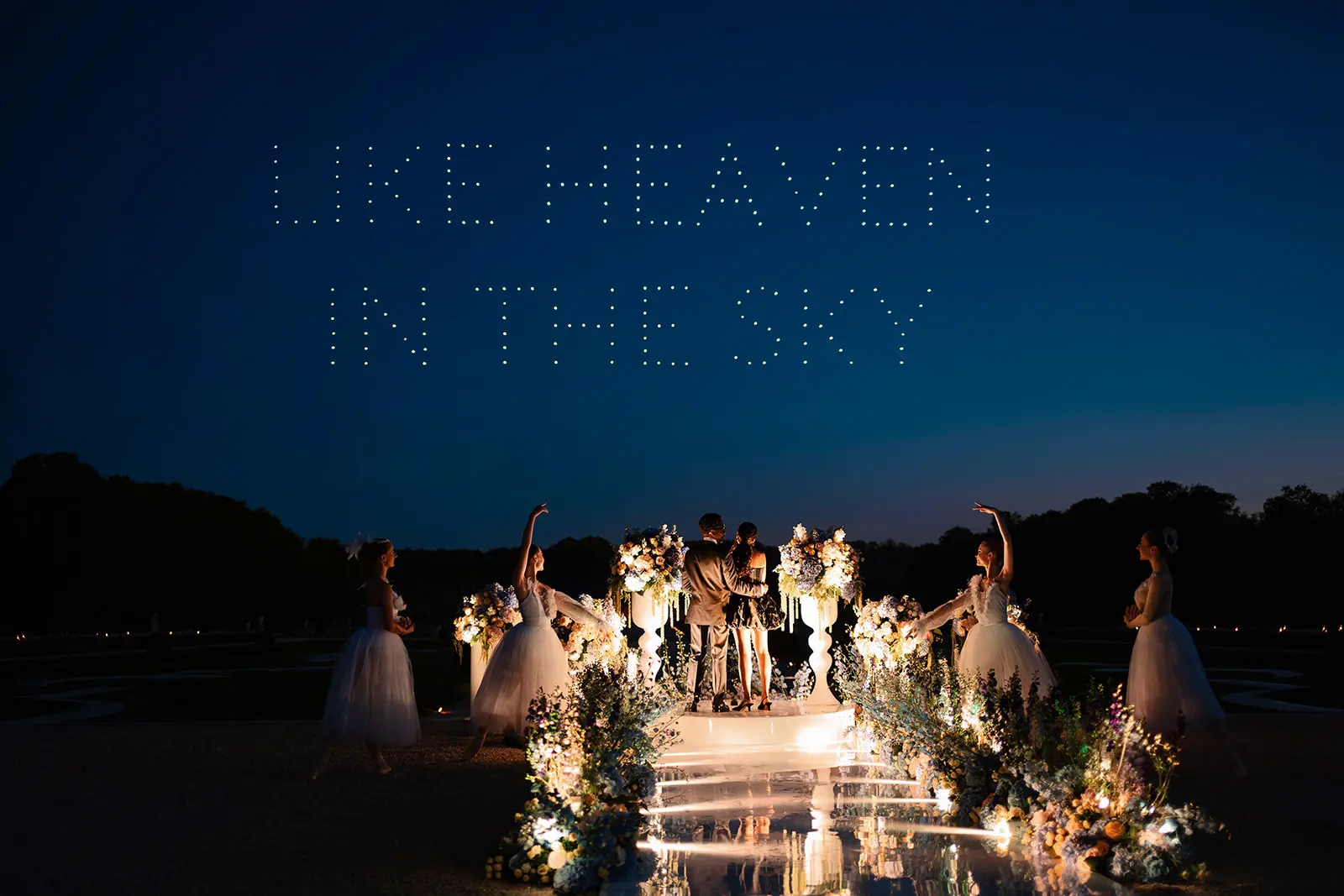
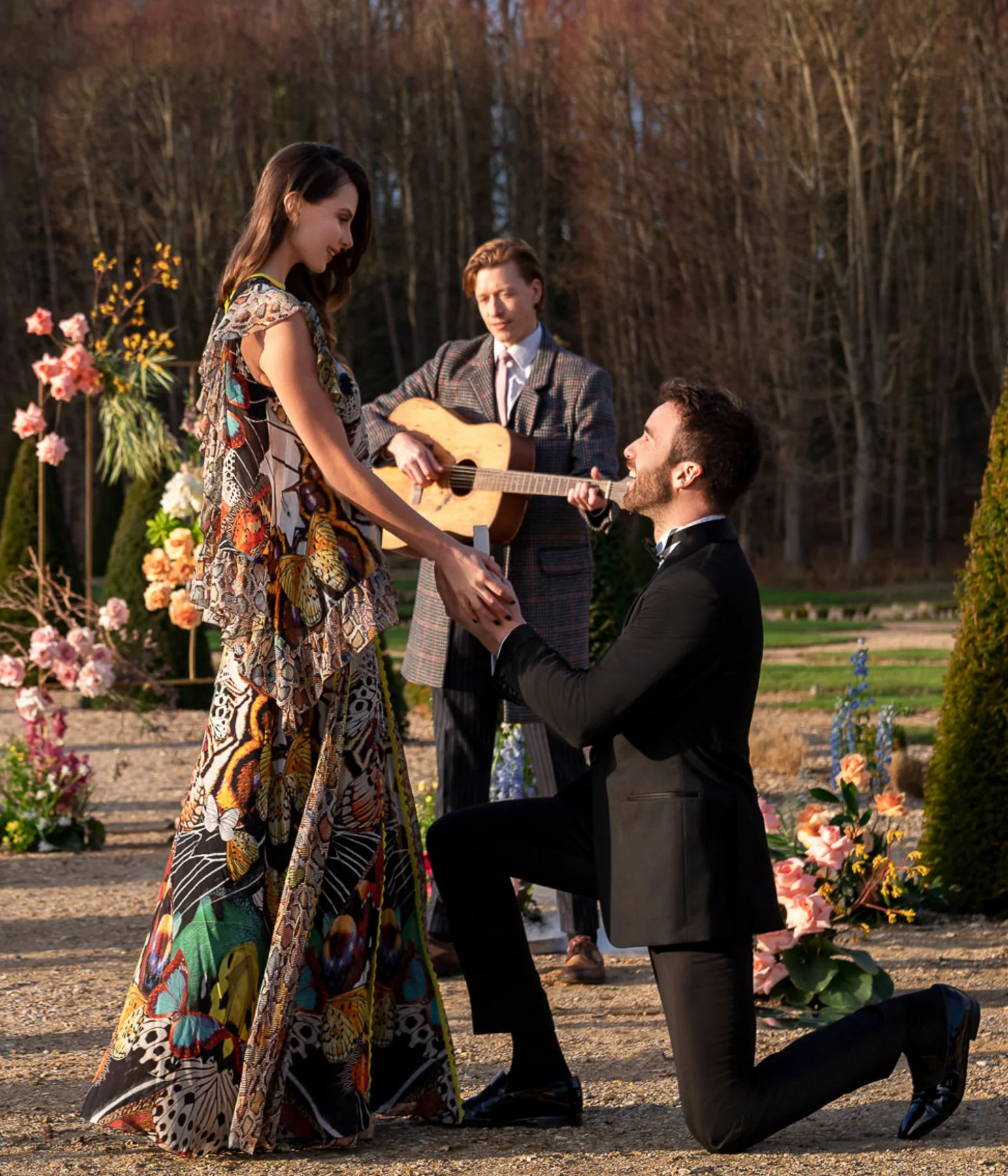
The speech need not be spoken from memory, or even spoken throughout. We have seen it read from a note, built into photographs and messages, turned into a scavenger hunt, and written across the sky with a drone show.
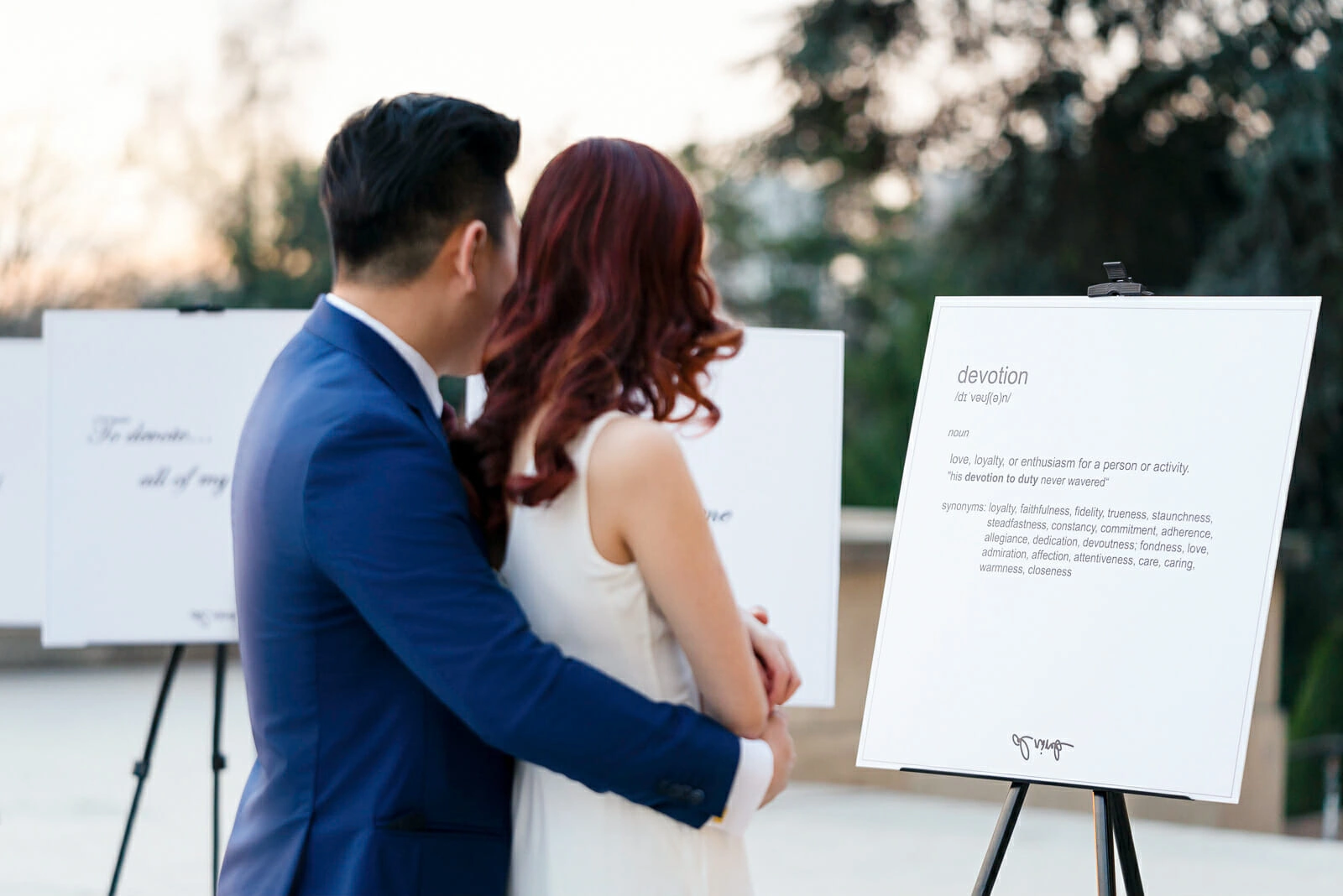
For one proposal, a series of easels led her through memories of their trips, adventures and relationship. The final easel said, “Turn around.” He was behind her on one knee with the ring.
Two different ways to share your proposal speech
How long should a proposal speech be?
Most speeches fall around 45 seconds to two minutes, as a reference rather than a rule. Thirty seconds can be enough; a few minutes can work when you have more to say.
Take your time and make sure you have her full attention. Avoid continuing out of nerves and starting to ramble. When it feels finished, let the box come out and the question follow.
Should you memorize it, read it, or speak freely?
All three work. Choose what suits you and will resonate with her.
Being spontaneous and natural is not the same as winging it. You do not need to memorize every word, but you do need to prepare. Think through what you want her to hear and practice saying it aloud. She deserves that care.
How should you practice?
Prepare in advance, allowing whatever time your confidence and nerves require. You may need an evening or several weeks. Memorizing is not required.
Practice the physical transition separately:
speech → release her hands → small step back → jacket open → closed ring box → knee → open box → question
You are making the mechanics familiar enough to concentrate on her, rather than wondering which pocket the box is in or which way it opens. You are not rehearsing her reaction.
What should you not say in a proposal speech?
Leave out anything that pulls attention away from why you are standing before her: old disputes, apologies, or words aimed at the camera or people watching. If a line is not for her, it does not belong.
Can you record the proposal speech?
Yes. If you want to hear your speech, her answer and the first reactions afterward, ask for live audio before the proposal day.
Many proposal films are edited primarily to music, so do not assume your words will be recorded clearly. Tell your filmmaker what you want captured and let them recommend the right audio setup for the setting.
The proposal sequence
From arrival to your first toast. The speech is step three.
- Arrival. She comes to you and you walk her in, or you arrive together. Your cover story decides which.
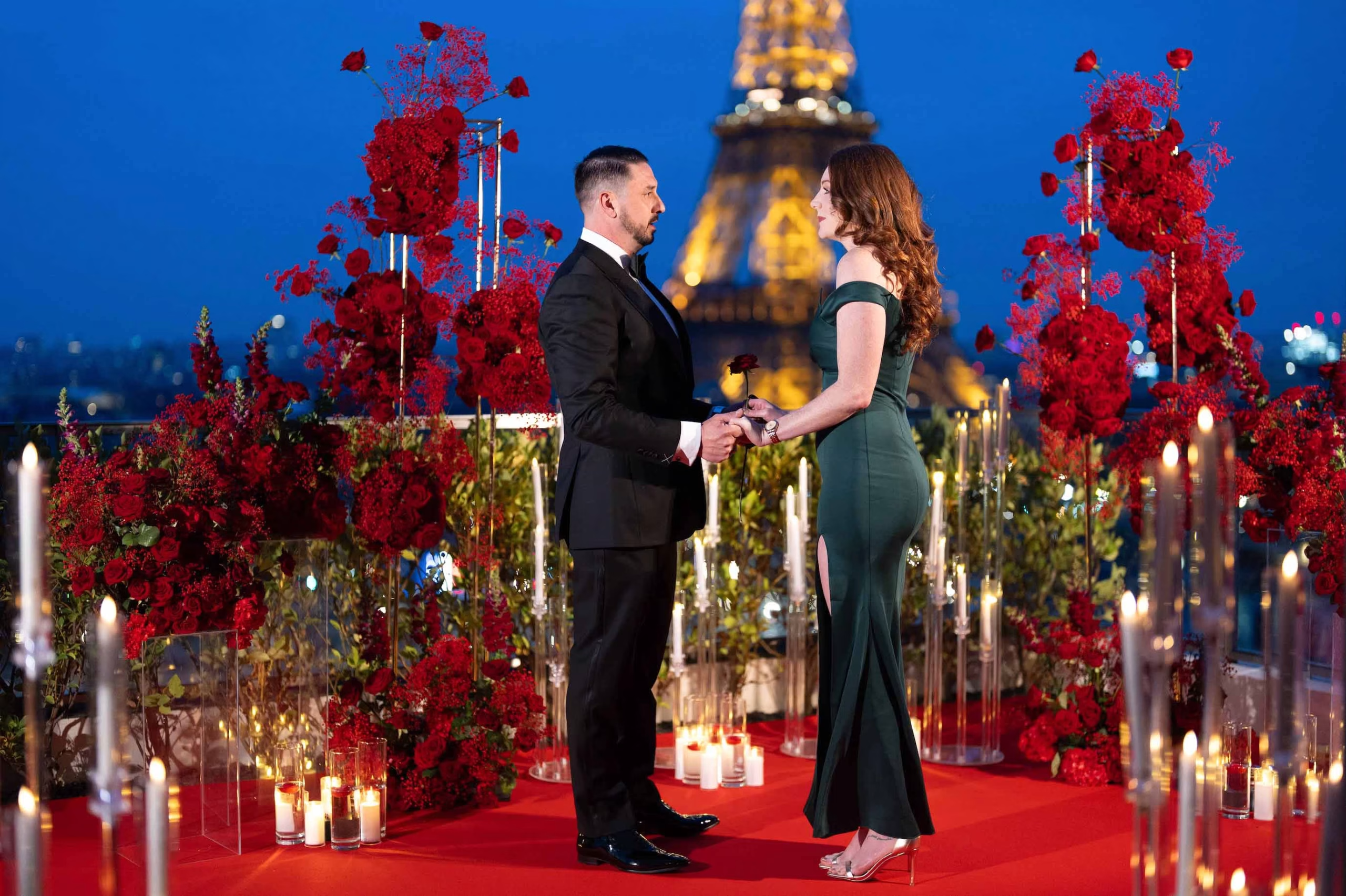
- Positioning. Face each other, your backdrop behind you and the photographer in front, close enough to feel connected.
- The speech. Hold her hands, look her in the eyes, and say what you came to say.
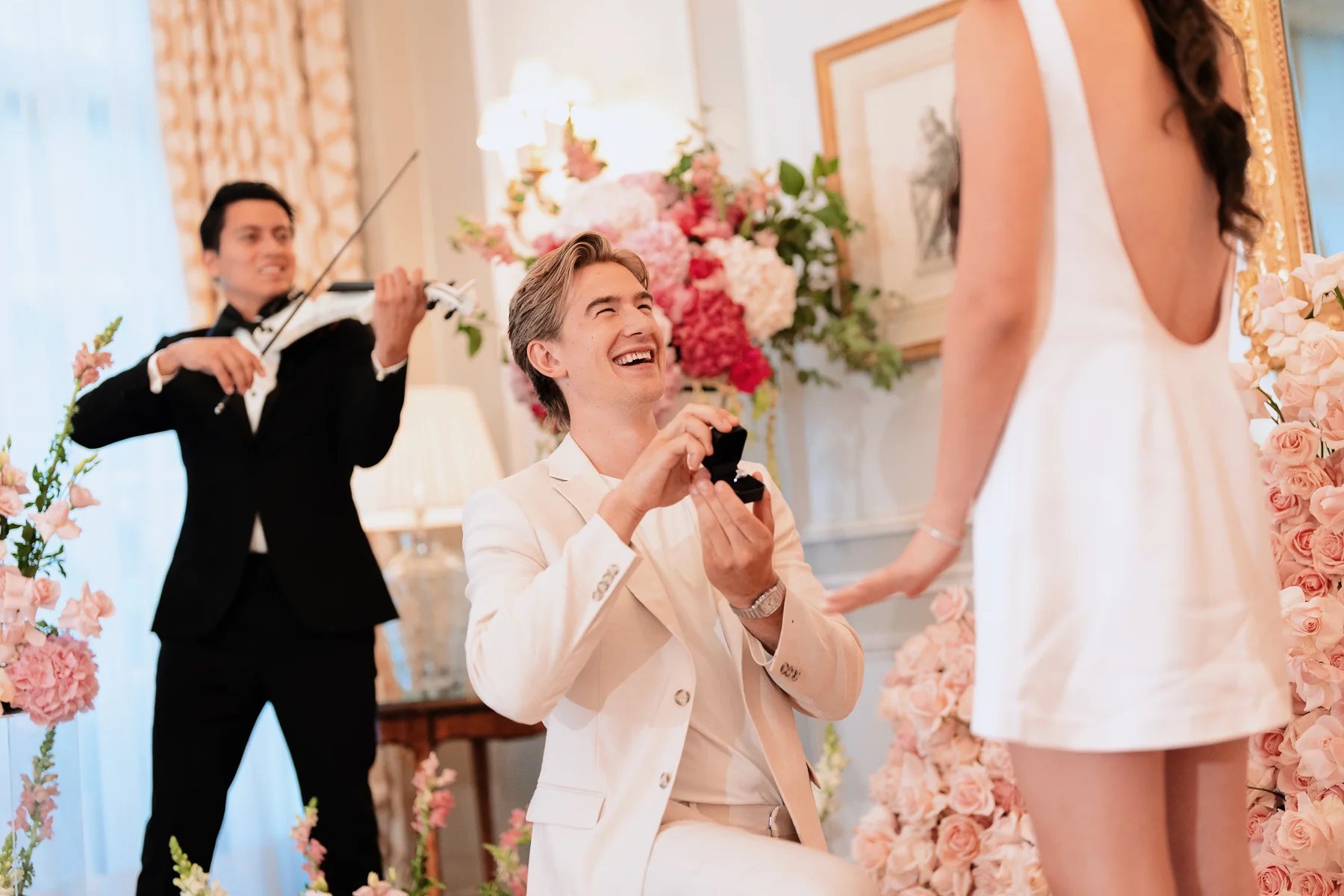
- The ring box. Release her hands, step back, unbutton your jacket, and take out the closed box.
- The knee. Kneel on the knee closest to the photographer, normally your right.
- The question. Open the box with the ring facing her and ask: Will you marry me?
- The ring. After the yes, set the open box down, take out the ring, and place it on her finger, kneeling or standing.
- The reaction. Stay with each other. Do not turn toward the camera.
- Champagne and the first toast. Give yourselves time together, then celebrate when you are ready.
The order matters, but none of it should feel rehearsed. Know the sequence well enough that you can forget about it and concentrate on her.
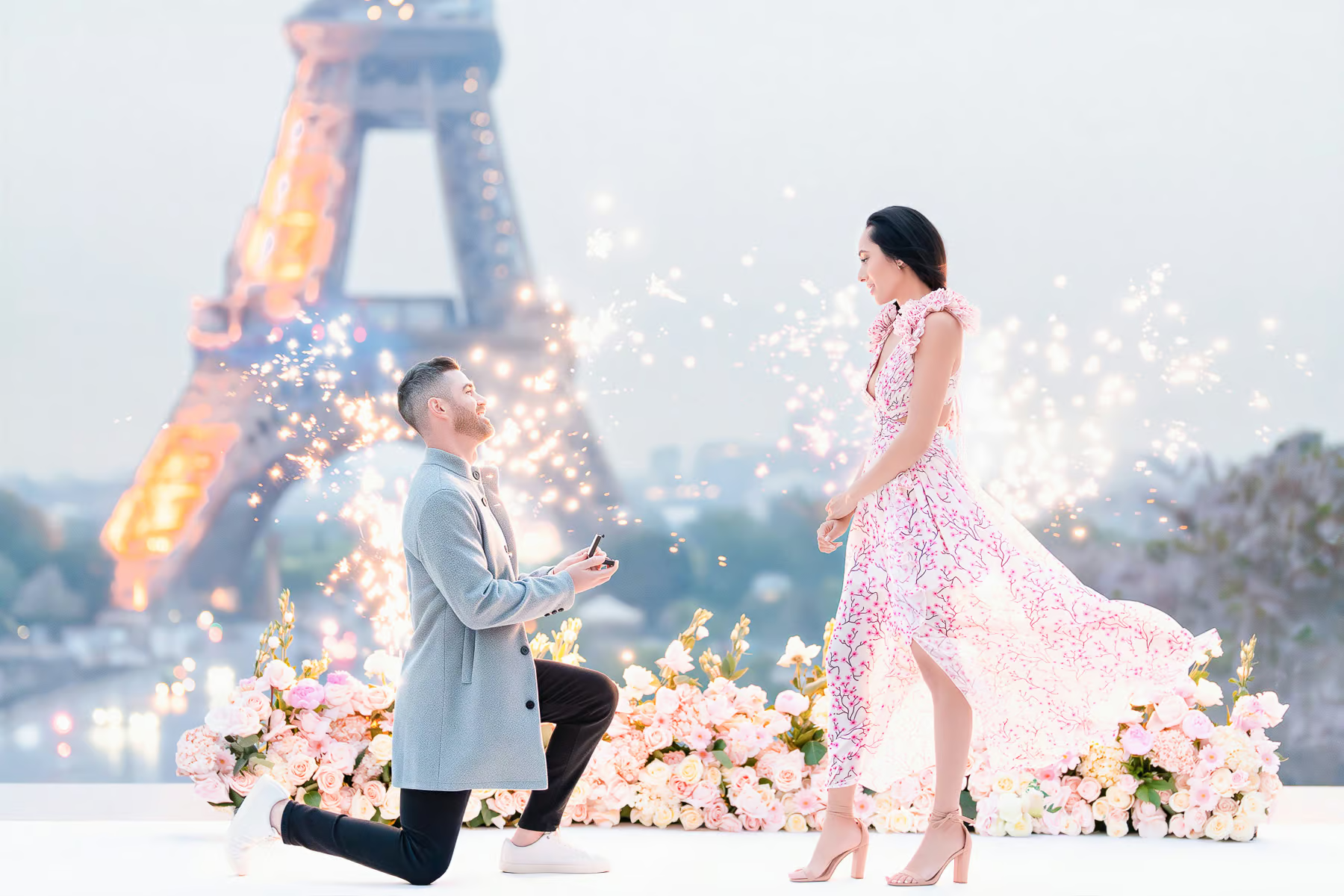
How should you enter the proposal setting?
You may arrive first and wait for her, or walk in together. Your cover story and concept decide which.
If she arrives after you
You are in place before she is, with a few minutes to yourself to settle your nerves and confirm the positioning. Your photographer may use that time for ring details or a portrait of you in the setting.
You get to watch her arrive, spot you, and take in what you designed for her. When you see her, step toward her, take her hand, and walk into the setting together. Do not stand frozen at the far end. She has just realized what is happening; she should not have to make that walk by herself.
If you arrive together
Walk in hand in hand, side by side at a normal pace, toward your planned position.
In a public setting, especially a proposal with a hidden photographer (what we call paparazzi-style), make brief eye contact with your photographer on the way in. They know you are ready, and you know where they are; then turn your attention back to her.
Pause on the way in
Stop for a few seconds and pull her close. It settles your nerves and gives her time to take in the flowers, the view, the musician, and everything you designed for her. It also tells her, without a word, that something is about to happen. Then walk her into position.
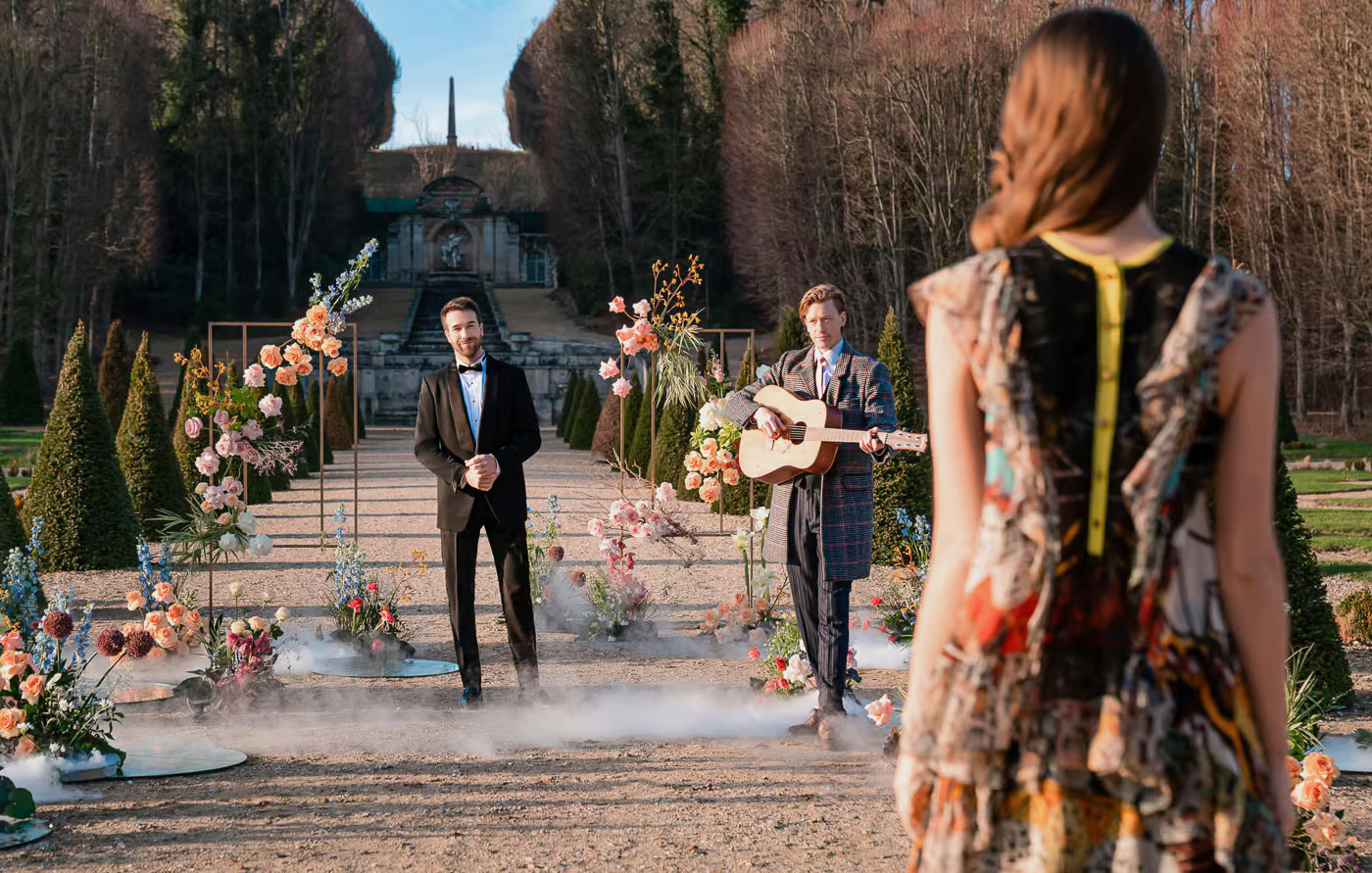
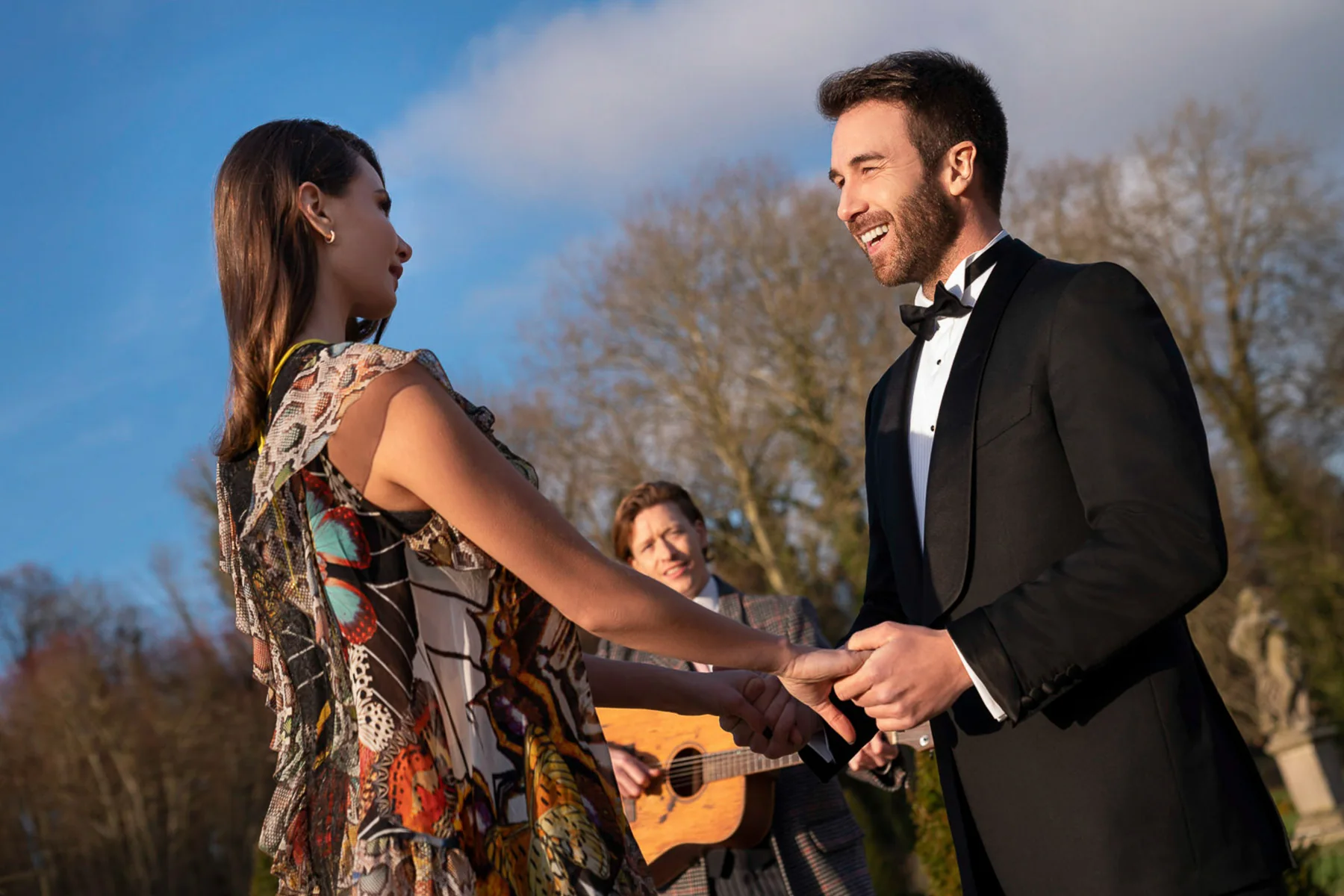
How should you position yourselves before the proposal speech?
Get into position before you begin speaking. From the photographer’s point of view, you stand on the left and she stands on the right. Face each other, with the photographer in front and your chosen backdrop behind you.
This gives the camera a clear view of both faces and keeps her left hand on the camera side for the ring exchange. Stay close enough to feel connected, with enough space to be comfortable.
If she favors one side in photographs, tell your photographer beforehand. How she likes to look matters more than the standard arrangement. If you switch sides, the knee switches too: kneel on the knee closest to the photographer, normally your right.
While you speak, hold both of her hands softly and look her in the eyes. It keeps you connected and can help her balance in heels on gravel or cobblestone.
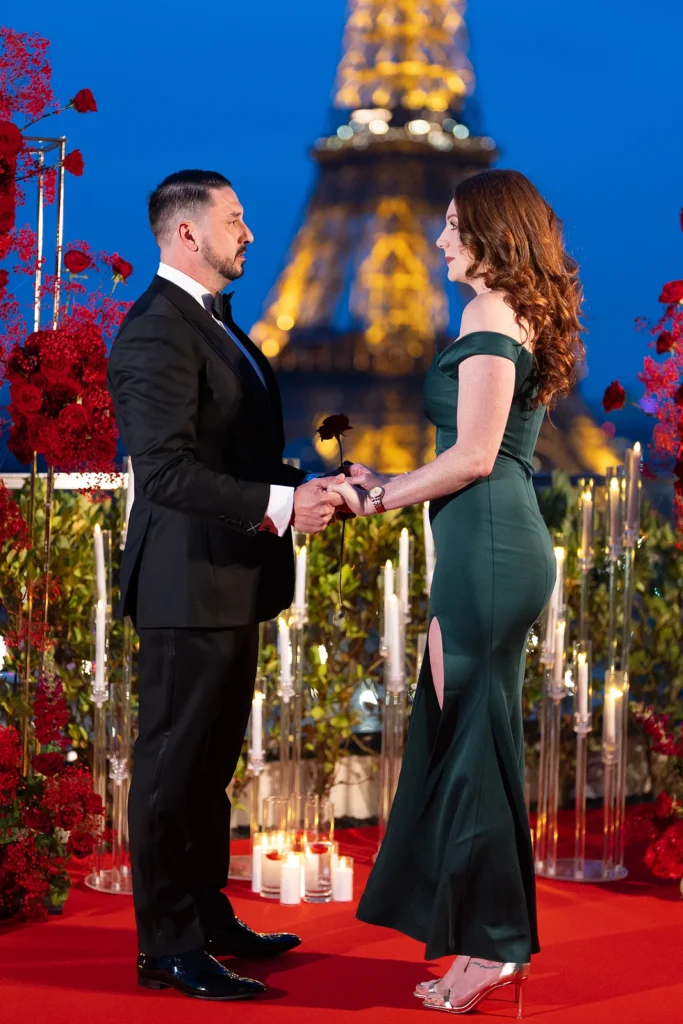
When should you get down on one knee?
When the proposal speech is finished. Release her hands and take a small step back. Unbutton your jacket so the lapels stay flat when you raise the box, then take the closed ring box from your pocket.
Hold it where she can see it and pause. This builds anticipation and lets you feel which way it opens. A tiny indentation or scratch on the underside can help you recognize the orientation by touch, even at night.
Go down on the knee closest to the photographer, normally your right. Keep your rear toe pointed straight down, a comfortable heel-to-knee gap, an upright posture, and comfortable space between you. Present the box with both hands.
Open it with the ring facing her, look her in the eyes, and ask:
Will you marry me?
Then wait. The pause may feel longer to you than it is. Stay on your knee and give her time to answer. She may tear up or come down to your level before she does.
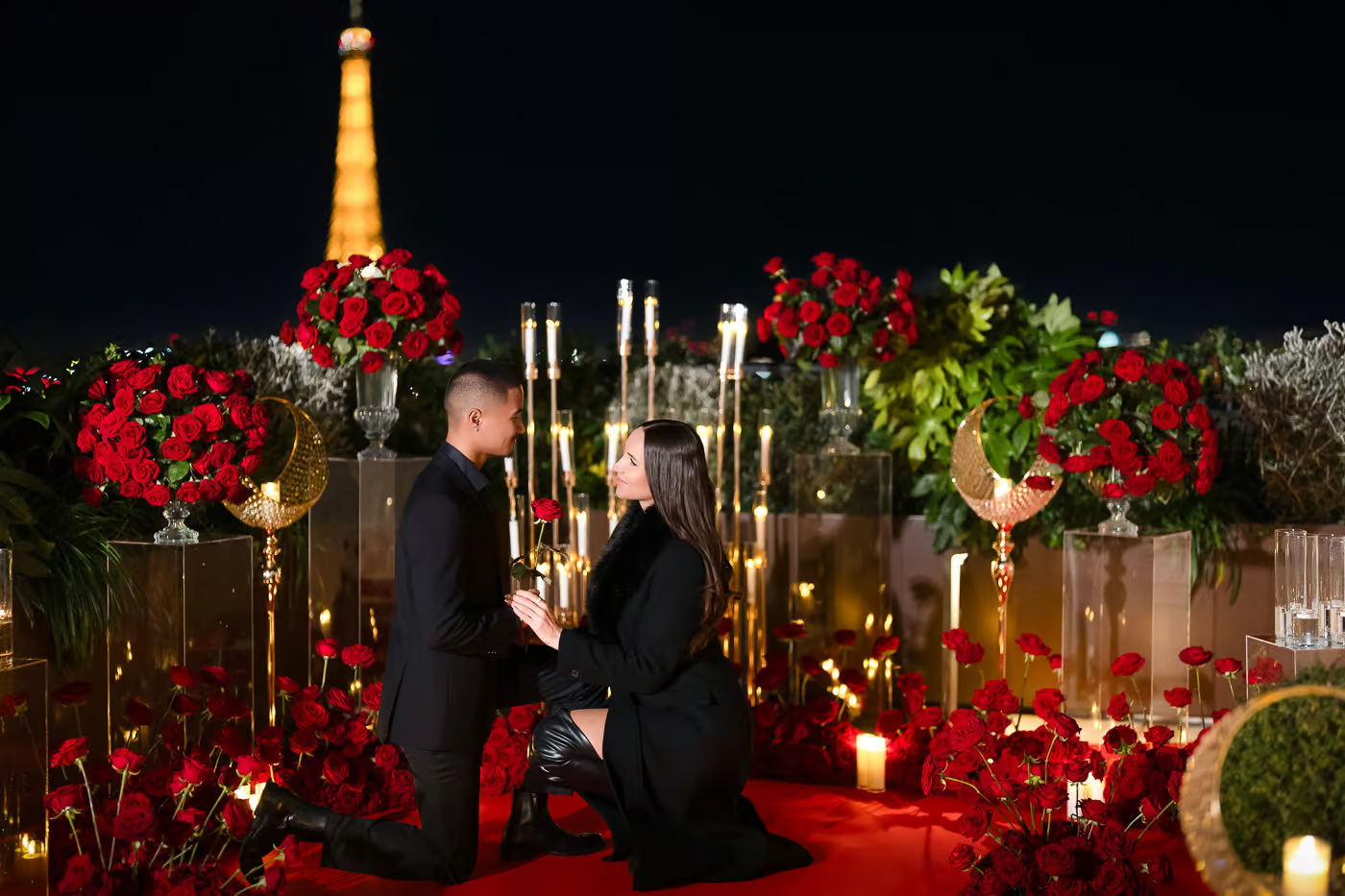
Perfect your proposal posture
For the full illustration, video, and common mistakes that affect your photographs and film, see our proposal posture guide.
How should you exchange the ring?
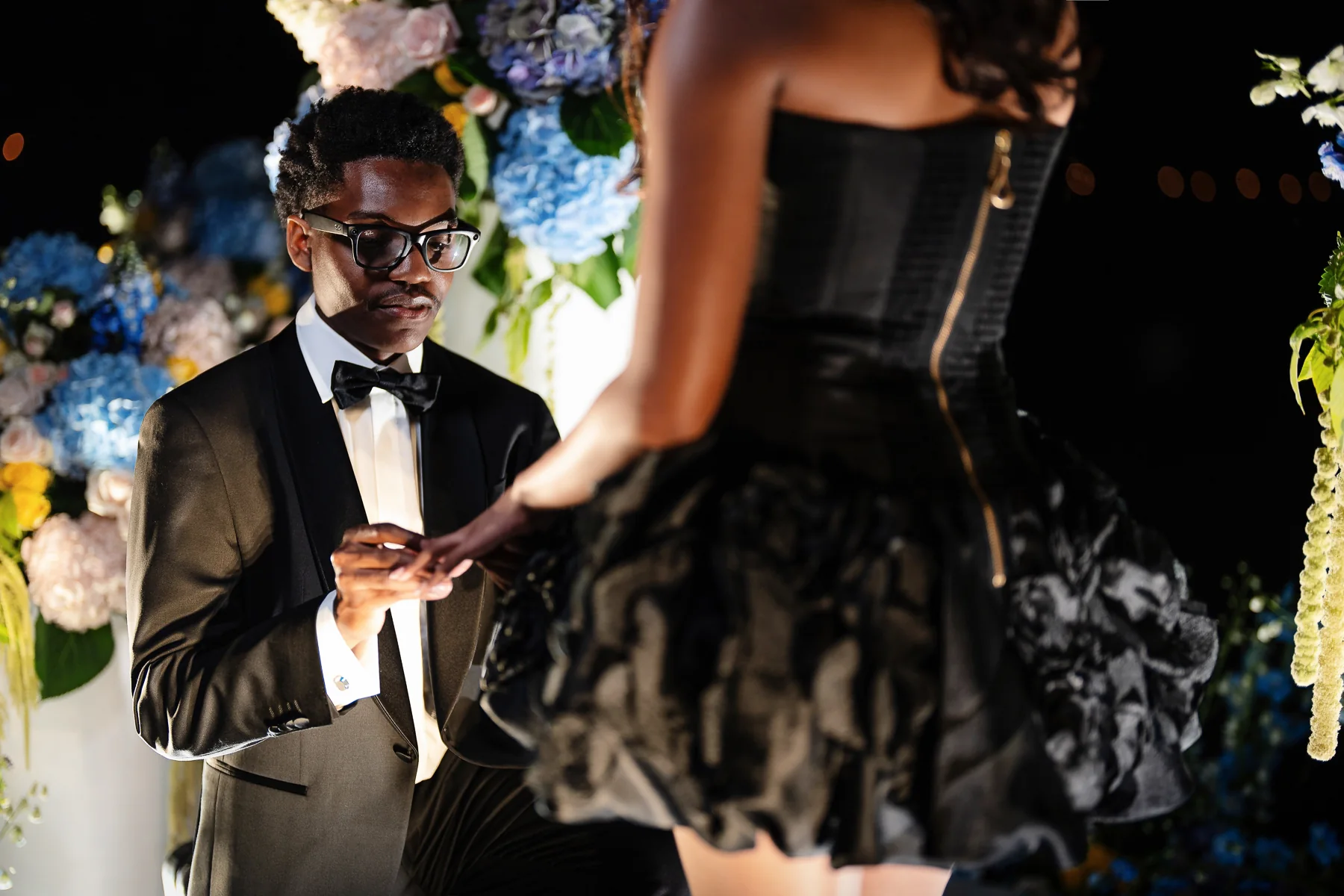
After she says yes, carefully set the open box on the ground and take out the ring. Take your time so you do not drop it.
Should you put the ring on while kneeling or after you stand?
Both work. We prefer standing at eye level, though you can place it on her finger while still on one knee.
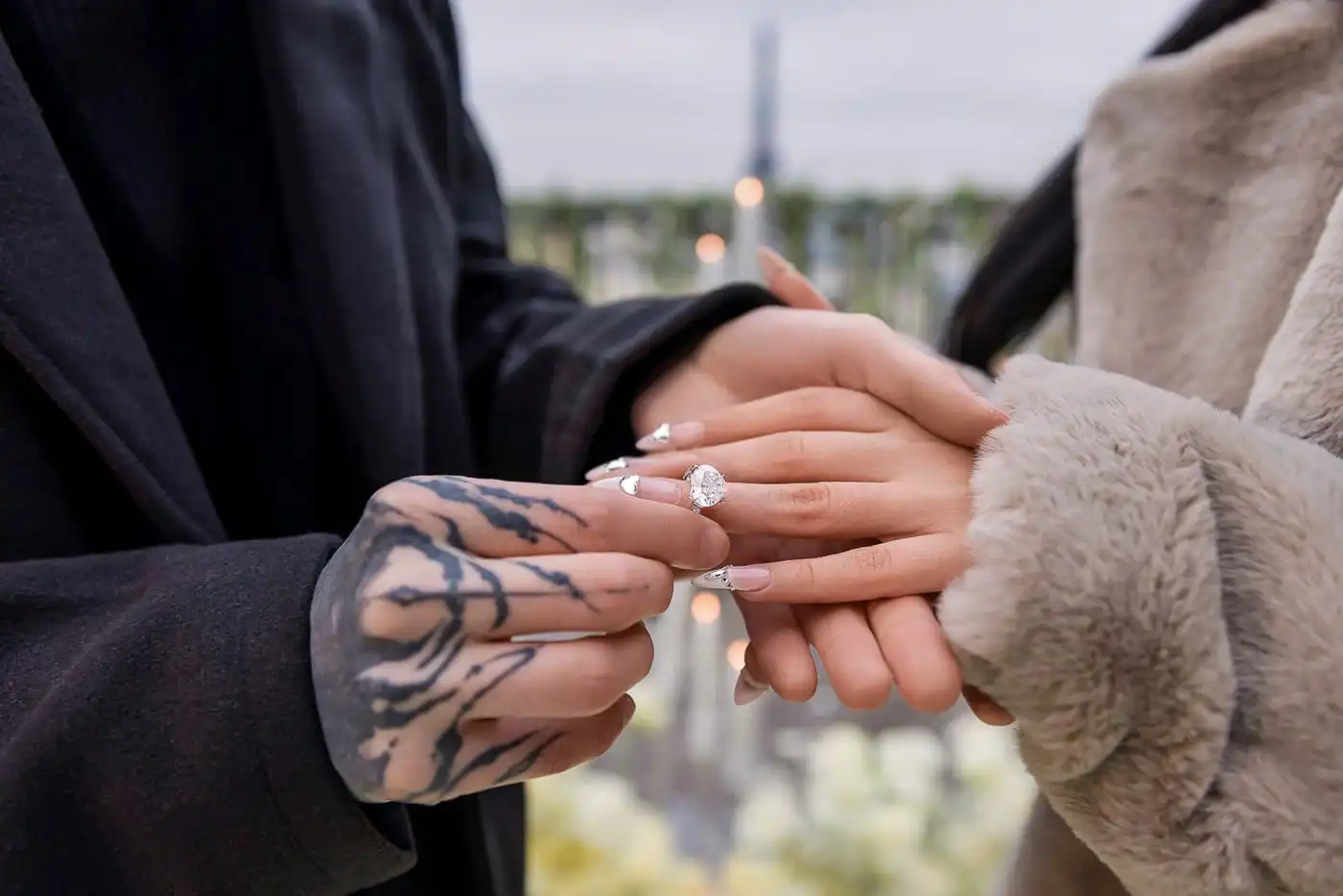
Support her left hand with your left hand underneath, palm up. Hold the ring between your thumb and index finger, bring it gently to her knuckle, pause and look her in the eyes, then slide it to the base of her finger. Avoid turning away or blocking the camera’s view of her ring hand.
The exchange happens quickly and only once; an experienced proposal photographer knows where to be. A filmmaker may capture an additional ring close-up later; that is normal, but recreating the proposal itself is not.
Which hand does the engagement ring go on?
In France, the United States, and many other countries, it goes on the fourth finger of the left hand. Some traditions use the right, and some do not include kneeling. Tell your planner and visual team beforehand if your customs differ, so they can adapt the positioning.
What should you do after she says yes?
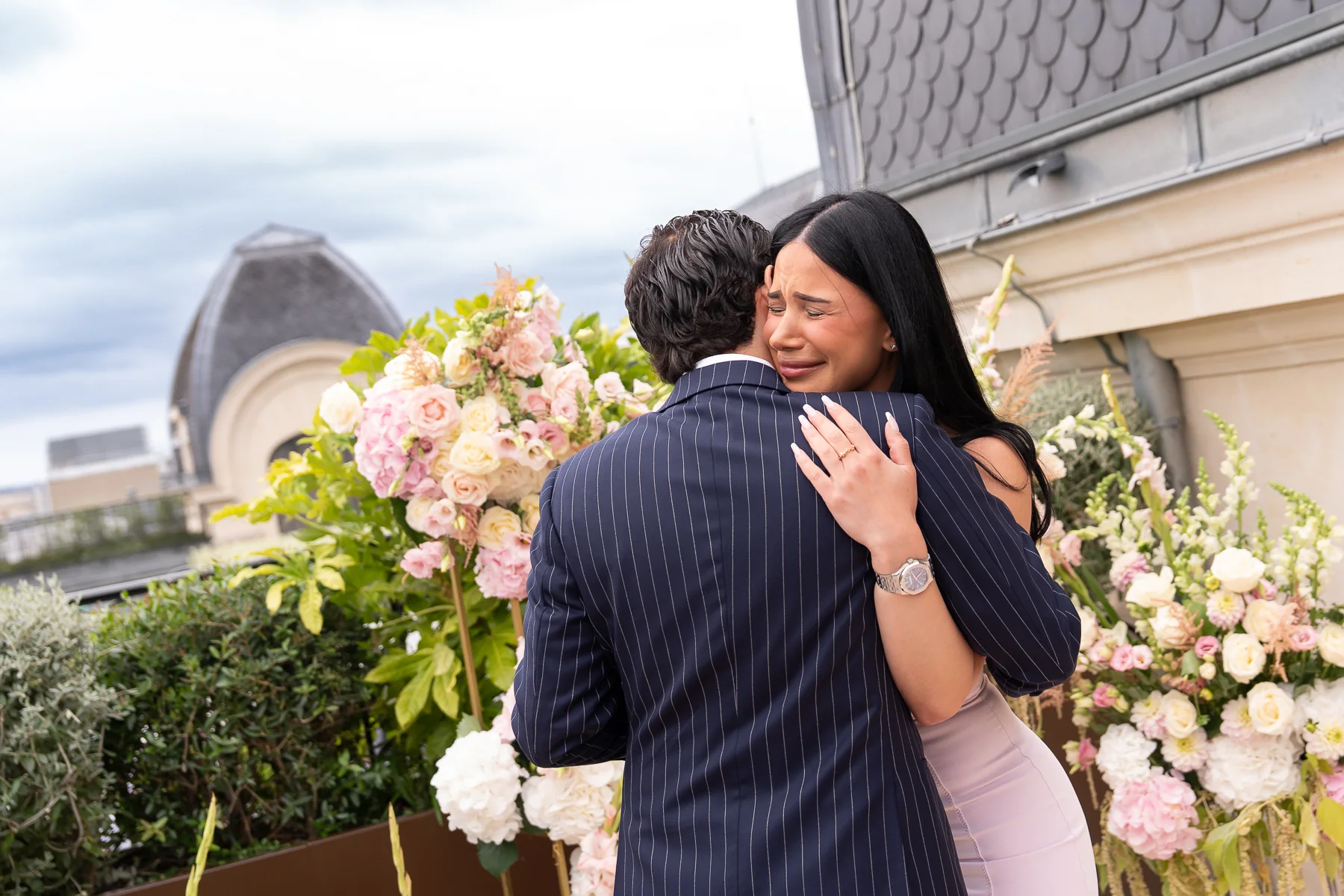
Stay with each other instead of turning toward the photographer or filmmaker. Let the first reactions happen: tears, laughter, an embrace, questions, or her staring at the ring she suddenly cannot take her eyes off.
You may lift her, spin her, kiss her, or simply stand there taking it in. None of it needs to be prompted. These are the reactions her parents and closest friends would love to have witnessed.
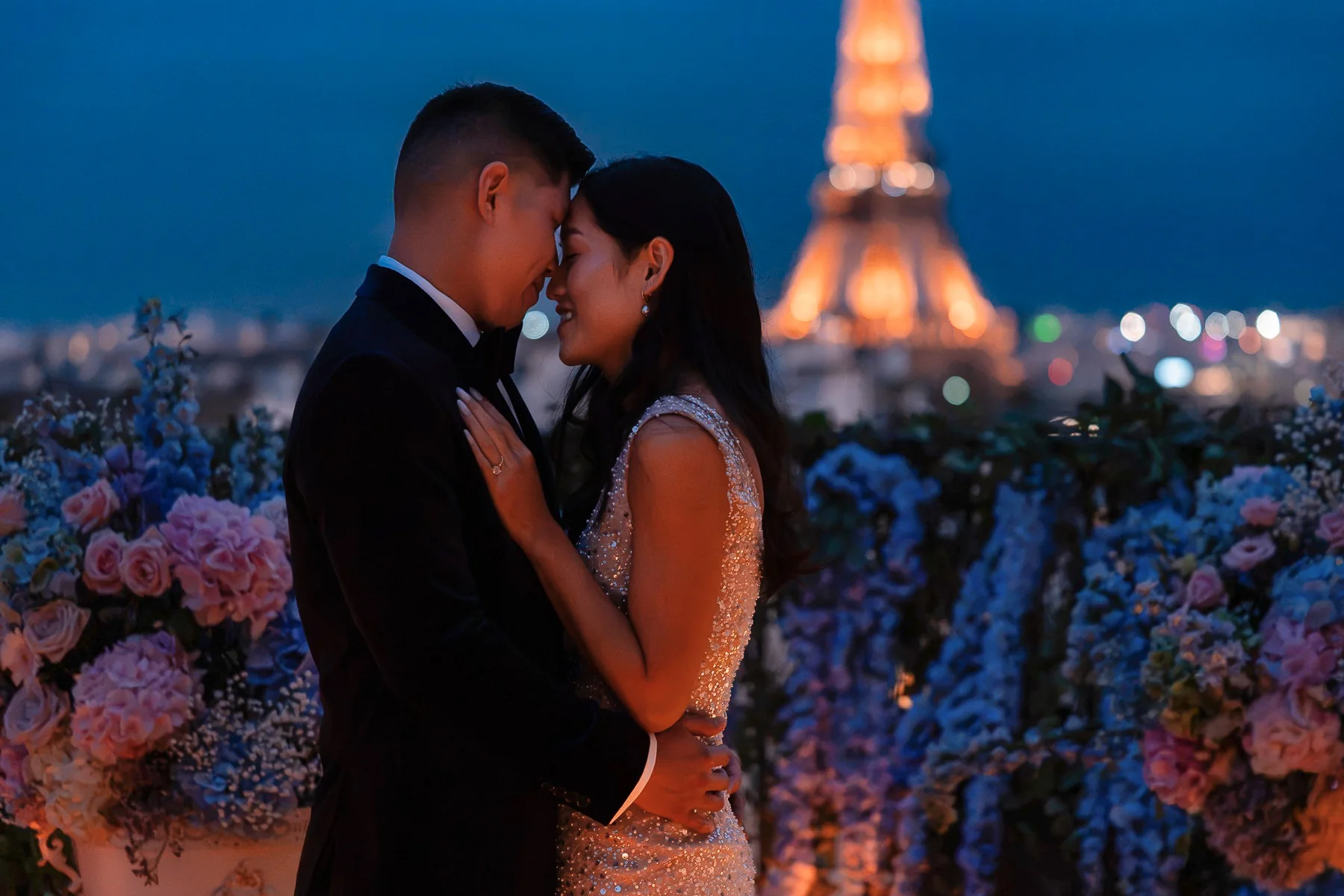
If it feels right, take her in your arms, turn together toward the view, and kiss her on the forehead. The portraits can wait; these first few minutes happen once.
When should the Champagne come out?
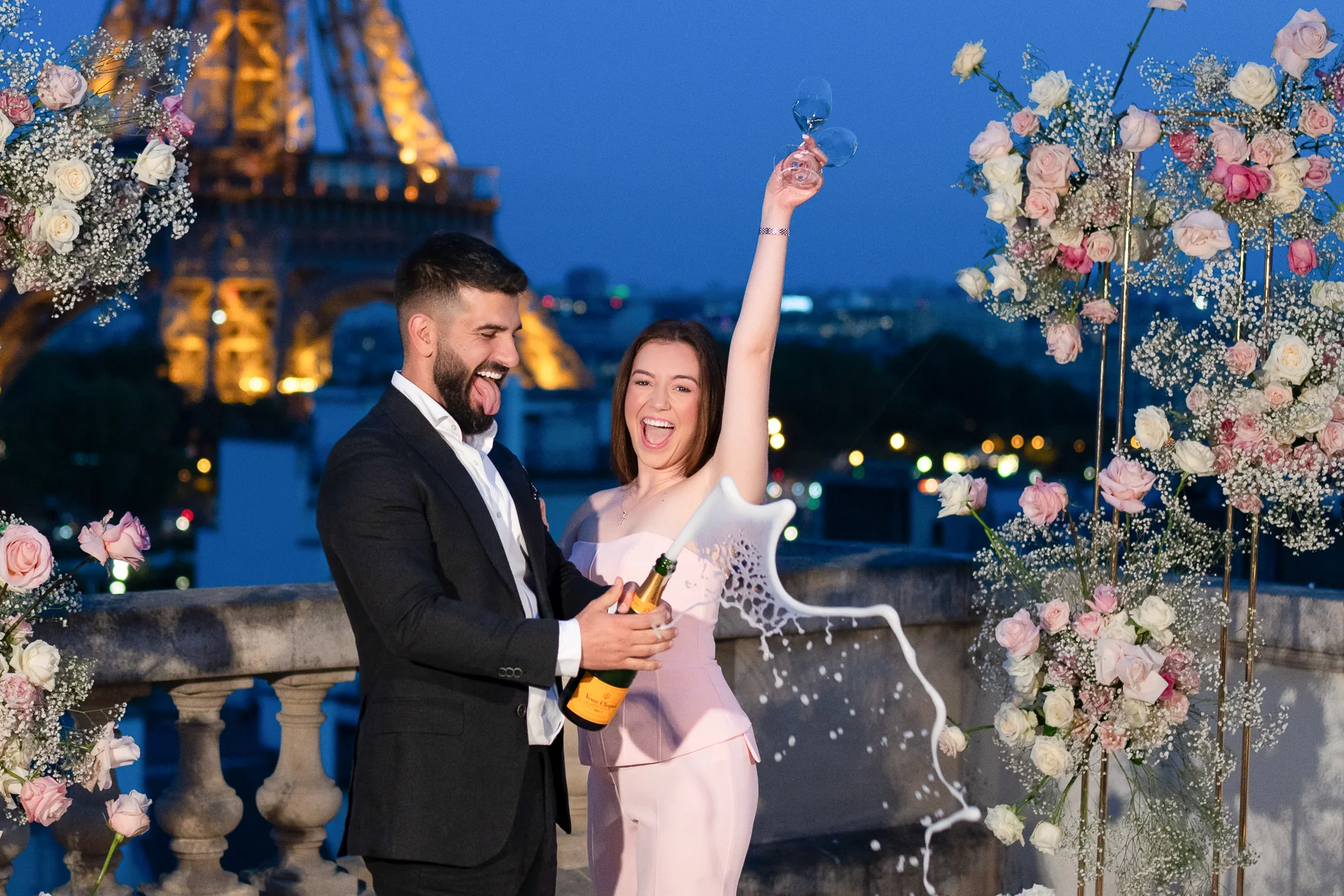
When the two of you are ready. Go straight to the bottle you want to drink, or pop a less expensive label first if you want the epic spray for a save-the-date photograph or film.
If you brought a rare bottle, such as a P2 Dom Pérignon, a 2008 Krug, or a magnum of Cristal, save it for the toast and bring what remains to your first dinner as an engaged couple.
Your first toast as an engaged couple
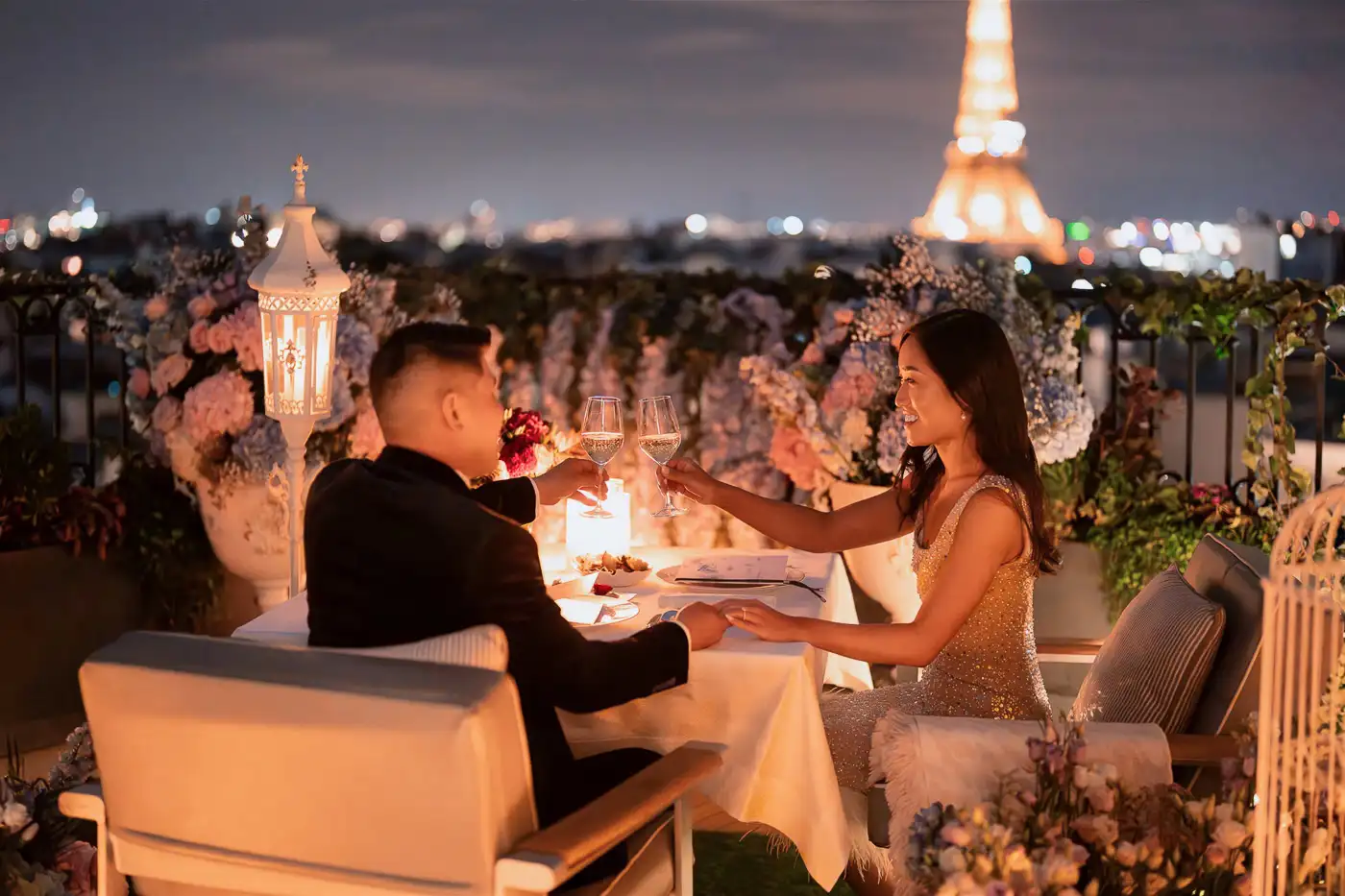
Whether you pour or someone brings the Champagne over, take another minute together. Hold the flutes by the stems, look at each other, and find a few more words from the heart.
A small turn of her hand brings the ring toward the camera; you can keep your attention on each other. Then clink glasses. The images will follow naturally, and your photographer can move into portraits when it feels right.
Plan the rest of your proposal day
A proposal is a day, from the time she wakes up not knowing to the last toast before bed.
Three decisions shape the experience and often the budget: Where do you propose? Where do you have your first meal as an engaged couple? Where do you spend your first night as fiancés?
For dinner, getting there, and your first night engaged, continue with our Paris proposal guide, or talk to our Paris proposal planner about the whole day.
Speak to us.
Your dates, your ideas, your questions — we’ll take it from there.